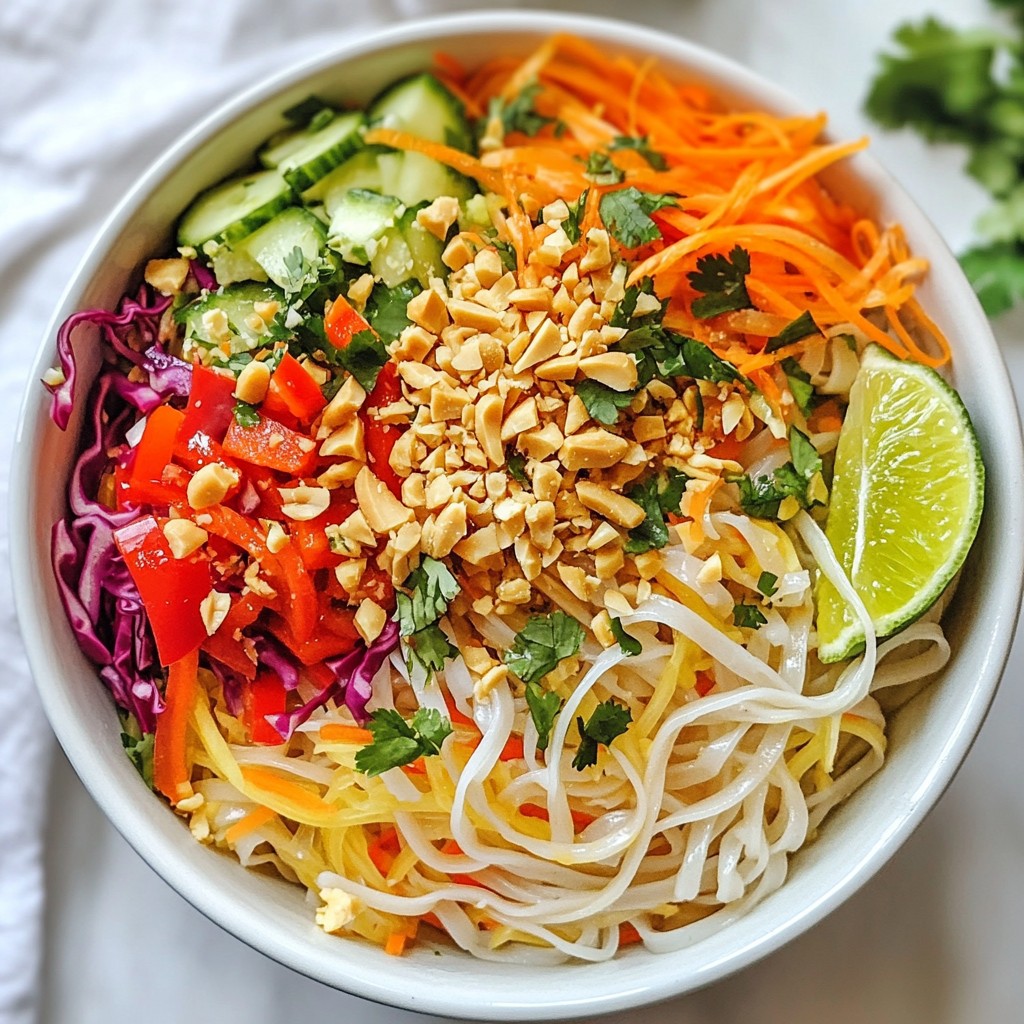
Craving a fresh and zesty dish? Look no further! My Thai Peanut Noodle Salad is both flavorful and easy to make. This vibrant meal packs a punch with its creamy peanut dressing and crisp veggies. Whether you're hosting a picnic or enjoying a quiet night in, this recipe is sure to impress. Let's dive into the ingredients and steps to create this delightful salad that’ll be a hit every time!
Why I Love This Recipe
- Fresh and Vibrant Ingredients: This salad bursts with color and flavor, thanks to the fresh vegetables and herbs, making it visually appealing and delicious.
- Quick and Easy Preparation: This recipe comes together in just 30 minutes, perfect for a busy weeknight dinner or a last-minute gathering.
- Healthy and Nutritious: Packed with fresh veggies and protein-rich peanuts, this salad is a wholesome meal that won't weigh you down.
- Customizable: Feel free to add your favorite proteins or substitute vegetables to make this dish your own!
Ingredients
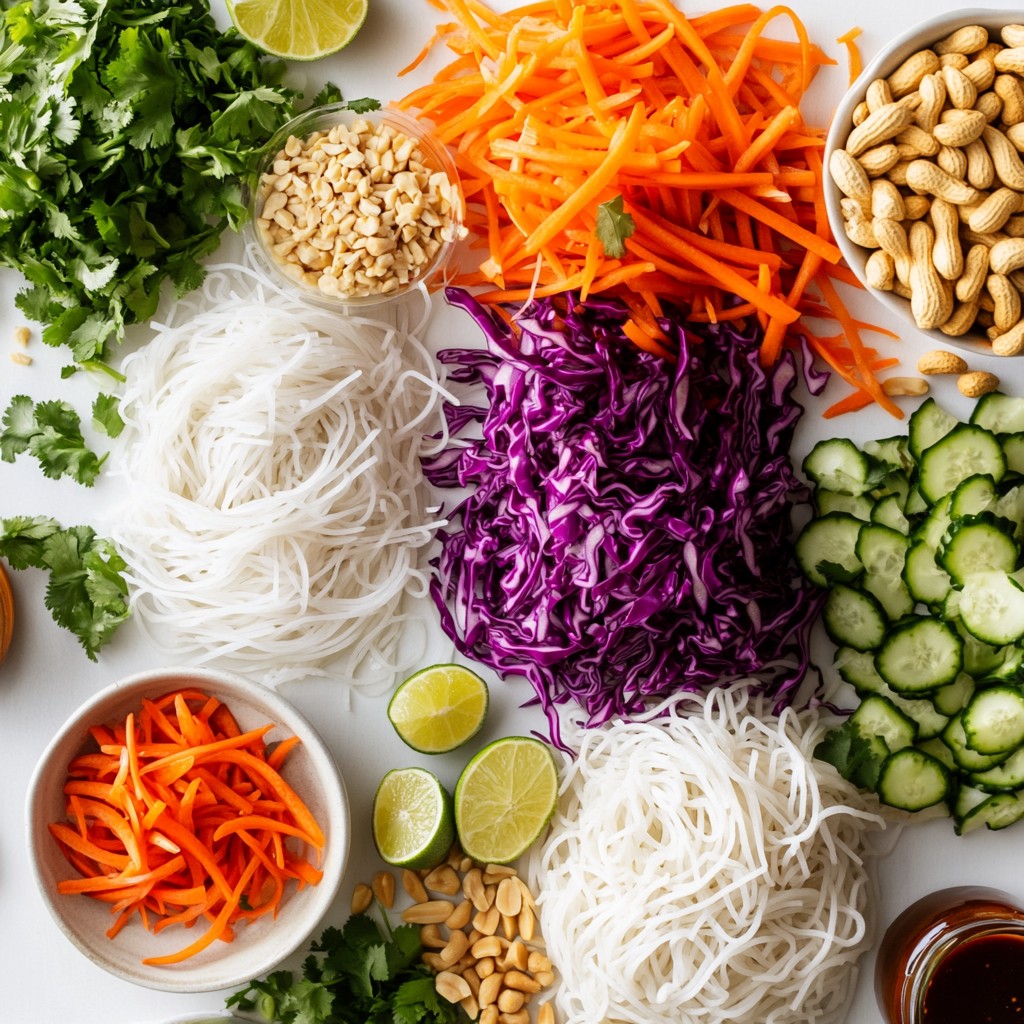
List of Ingredients
- 8 oz rice noodles
- 1 cup shredded carrots
- 1 red bell pepper, thinly sliced
- 1 cucumber, julienned
- 1 cup red cabbage, finely shredded
- 1 cup fresh cilantro, roughly chopped
- 1/4 cup green onions, thinly sliced
- 1/4 cup unsalted peanuts, roughly chopped
For the Peanut Dressing:
- 1/3 cup creamy peanut butter
- 2 tablespoons soy sauce
- 1 tablespoon freshly squeezed lime juice
- 1 tablespoon maple syrup or honey
- 1 teaspoon sriracha (adjust according to your spice preference)
- 1-2 tablespoons warm water (to achieve a smoother consistency)
Optional Add-Ins
You can add some fun extras to your salad. Try:
- Cooked chicken or shrimp for protein.
- Avocado slices for creaminess.
- Snap peas for extra crunch.
- Chopped mint for a fresh twist.
Substitutes for Allergies
If you have allergies, here are some great swaps:
- Use gluten-free noodles if you avoid gluten.
- Substitute sunflower seed butter for peanut butter.
- Choose tamari instead of soy sauce for a gluten-free option.
- Maple syrup can be swapped with agave nectar for a vegan choice.
Step-by-Step Instructions
Cooking the Rice Noodles
To cook the rice noodles, fill a large pot with water. Bring the water to a rapid boil. Once boiling, add 8 oz of rice noodles. Cook them according to the package instructions, usually 4-6 minutes. You want them al dente, not mushy. After cooking, drain the noodles in a colander. Rinse them under cold running water. This stops the cooking process. Set the noodles aside for later.
Preparing the Vegetables
While your noodles cook, prepare the vegetables. Start with 1 cup of shredded carrots. Then, thinly slice 1 red bell pepper. Next, julienne 1 cucumber for a nice crunch. Finely shred 1 cup of red cabbage. Chop 1 cup of fresh cilantro. Finally, thinly slice 1/4 cup of green onions. Having all these ready makes mixing easier.
Making the Peanut Dressing
In a medium mixing bowl, combine the peanut dressing ingredients. Start with 1/3 cup of creamy peanut butter. Add 2 tablespoons of soy sauce. Then, squeeze in 1 tablespoon of fresh lime juice. Next, add 1 tablespoon of maple syrup or honey. For some heat, mix in 1 teaspoon of sriracha. Whisk everything until smooth. If it's too thick, add 1-2 tablespoons of warm water. This will help you reach a creamy texture.
Combining the Salad
In a large mixing bowl, combine the cooked rice noodles with the prepared vegetables. Add the shredded carrots, sliced bell pepper, julienned cucumber, shredded red cabbage, chopped cilantro, and green onions. Gently toss all the ingredients together. Make sure everything is mixed well.
Garnishing the Salad
Drizzle the peanut dressing over the noodle and veggie mix. Toss everything carefully to coat it in the dressing. This is where the magic happens! For a tasty finish, sprinkle roughly chopped peanuts on top before serving. This adds crunch and flavor. Enjoy your colorful and tasty Thai Peanut Noodle Salad!
Tips & Tricks
Cooking Tips for Perfect Noodles
To cook rice noodles, bring a large pot of water to a boil. Add the noodles and cook for 4-6 minutes. Check for doneness; they should be tender but firm. Drain the noodles and rinse them with cold water. This stops the cooking and keeps them from getting mushy.
Dressing Consistency Adjustments
If your peanut dressing is too thick, add warm water. Start with one tablespoon, stirring until smooth. You can add more water if needed. Adjust the flavors by adding more lime juice or sriracha to match your taste. A good dressing coats the noodles without overpowering them.
Serving Suggestions
Serve the salad in wide bowls for a nice presentation. Top with extra chopped peanuts and fresh cilantro for color. Add lime wedges for a zesty touch. This salad is great as a main dish or a side. Enjoy it cold or at room temperature for the best taste.
Pro Tips
- Use Fresh Ingredients: The quality of your vegetables directly impacts the flavor and texture of your salad. Opt for fresh, crisp vegetables for the best results.
- Adjust the Spice Level: Feel free to modify the amount of sriracha in the dressing based on your personal heat preference. Start with less and add more as needed.
- Prep Ahead: You can prepare the vegetables and dressing in advance. Store them separately in the fridge to keep everything fresh until you're ready to serve.
- Experiment with Add-ins: Consider adding protein like grilled chicken, shrimp, or tofu for a more filling meal. You can also include other vegetables, such as snap peas or radishes, for added crunch.
Variations
Protein-Packed Additions
You can add protein to this salad for a hearty meal. Shrimp, chicken, or tofu work well. For shrimp, cook them until pink and toss them in. For chicken, use grilled or rotisserie chicken. If you prefer tofu, cube it and pan-fry until golden. Each protein makes the dish filling and tasty.
Vegetarian and Vegan Alternatives
This salad is easy to adapt for different diets. For a vegetarian option, add eggs or cheese. For a vegan twist, stick with tofu or chickpeas. You can also replace honey with maple syrup. This keeps the salad sweet without any animal products.
Spicy Alterations
If you like heat, boost the spice level. Add more sriracha to the dressing. You can also toss in sliced jalapeños or red pepper flakes. For a smoky flavor, try a dash of smoked paprika. Adjust the spice to match your taste buds.
Storage Info
How to Store Leftovers
To store your Thai peanut noodle salad, place it in an airtight container. Make sure to cool it down first. Keep it in the fridge. It will stay fresh for up to three days. The flavors will blend more as it sits. However, the veggies may lose some crunch over time.
Freezing Instructions
You can freeze this salad, but it's best to keep the dressing separate. The noodles and veggies can become mushy when thawed. To freeze, place the noodle mix in a freezer-safe bag. For the dressing, use a small container. It will last for about a month in the freezer.
Reheating Tips
When you’re ready to eat, thaw the salad in the fridge overnight. If you want to warm it up, use a stovetop. Heat it in a pan on low. Add a splash of water to prevent sticking. Stir gently until warmed through. For the dressing, you can microwave it in short bursts. This keeps it creamy and easy to pour.
FAQs
Can I use other types of noodles?
Yes, you can use many kinds of noodles. You might try soba noodles or whole wheat spaghetti. Rice noodles are great because they are light and easy to work with. If you want a gluten-free option, choose rice noodles. They have a nice texture that blends well with the salad.
How long does the salad last in the fridge?
The salad can last about three to four days in the fridge. Make sure to store it in an airtight container. If you keep the dressing separate, it can stay fresh longer. Mixing the dressing in just before serving keeps the veggies crisp.
Is the dressing gluten-free?
Yes, the dressing can be gluten-free. Just use gluten-free soy sauce or tamari. Most peanut butter is gluten-free, but always check the label. This way, you can enjoy the salad without worry if you have gluten sensitivities.
In this post, we covered the key ingredients for making a delicious salad, plus optional add-ins and allergy substitutes. I detailed step-by-step cooking instructions, from rice noodles to garnishing. You learned tips for perfect noodles, adjusting the dressing, and great serving ideas. We explored variations for protein, vegetarian, and spicy options, alongside storage information for leftovers.
Remember, you can make this salad your own. Enjoy the fresh flavors, and have fun experimenting with different choices. Happy cooking!