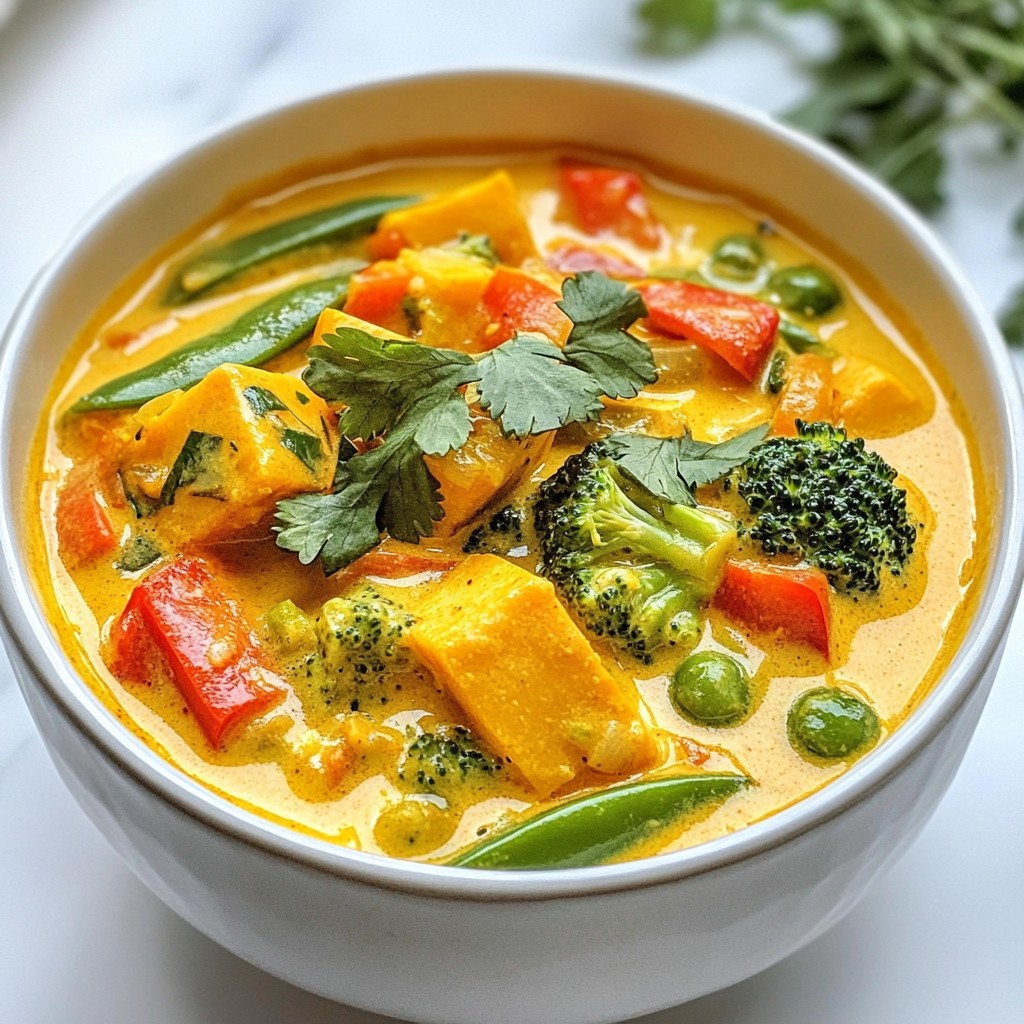
Craving a warm bowl of comfort? Thai Coconut Curry Soup is both flavorful and nourishing. This vibrant dish combines creamy coconut milk with fresh vegetables and aromatic spices. Whether you want a quick weeknight meal or a hearty dish for guests, this recipe is a winner. Join me as we explore how to create this delicious soup, packed with bold flavors and healthy ingredients. Let’s dive in!
Why I Love This Recipe
- Flavorful Harmony: This soup brings together the perfect balance of spices and creamy coconut, creating a delightful flavor experience in every spoonful.
- Nutritious Ingredients: Packed with vibrant vegetables and healthy sweet potatoes, this curry soup is as nutritious as it is delicious.
- Quick and Easy: With a total time of just 30 minutes, this recipe is perfect for busy weeknights when you crave something hearty without the fuss.
- Customizable Delight: Feel free to add your favorite proteins or vegetables, making this recipe versatile and adaptable to your taste preferences.
Ingredients
List of Ingredients
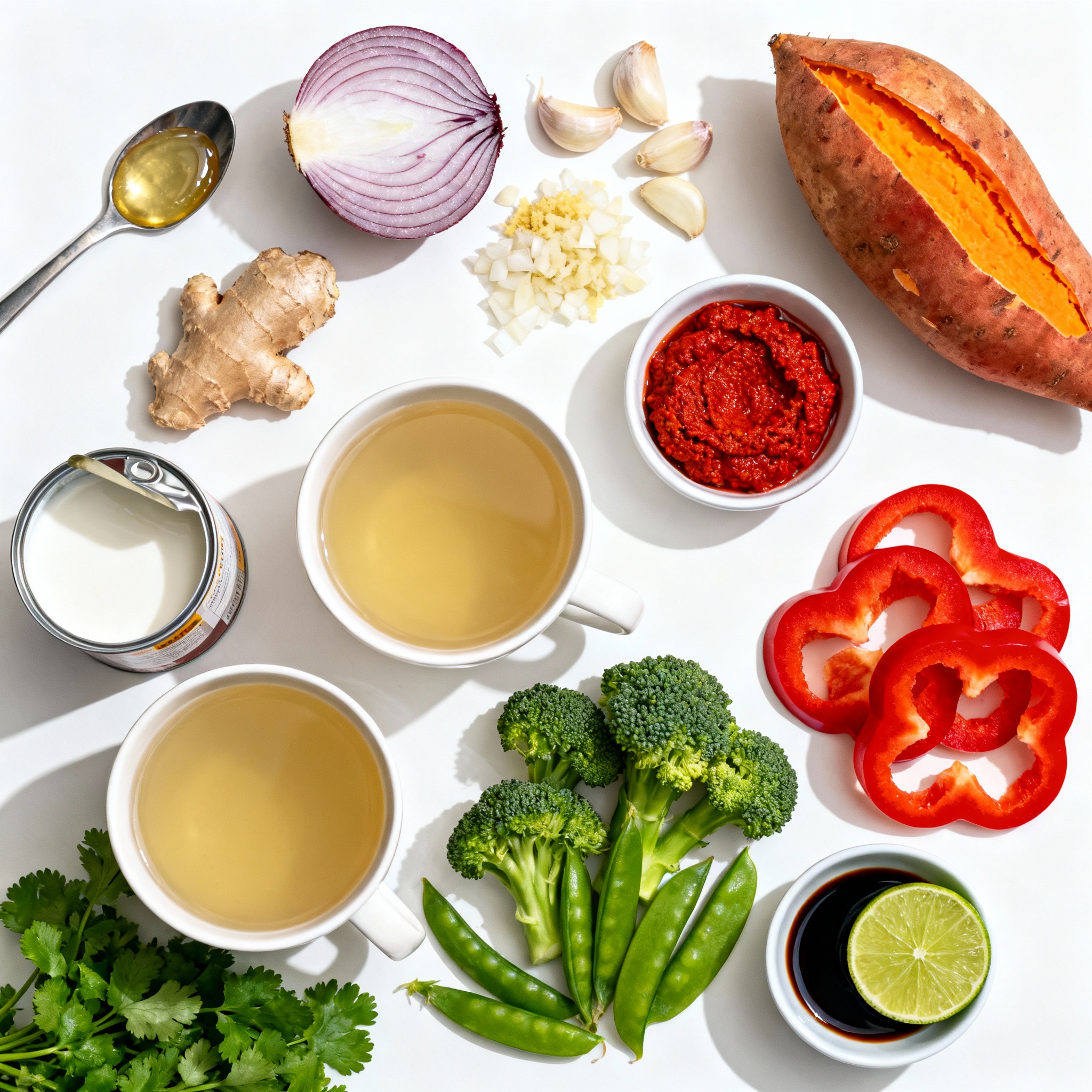
- 1 tablespoon coconut oil
- 1 medium onion, finely diced
- 3 cloves garlic, minced
- 1 tablespoon fresh ginger, freshly grated
- 1 tablespoon red curry paste
- 1 can (14 oz) coconut milk
- 3 cups vegetable broth (homemade or store-bought)
- 1 medium sweet potato, peeled and cut into 1-inch cubes
- 1 red bell pepper, sliced into thin strips
- 1 cup snap peas, trimmed
- 1 cup broccoli florets, bite-sized
- 2 tablespoons soy sauce or tamari (for gluten-free option)
- 1 tablespoon freshly squeezed lime juice
- Fresh cilantro leaves, for garnish
- Salt and pepper to taste
Ingredient Substitutions
If you need alternatives, here are some ideas:
- You can use almond milk or oat milk instead of coconut milk.
- Chicken broth or mushroom broth can replace vegetable broth.
- Swap sweet potato for butternut squash or carrots.
- Use green bell pepper if red is not available.
Tips for Fresh Ingredients
Fresh herbs and spices make a big difference. They add real flavor. Use fresh ginger and garlic instead of dried. Choose bright, crisp veggies for the best taste and look. Fresh cilantro is key for garnishing. It adds a pop of flavor and color. When you shop, look for vibrant colors and firm textures to ensure quality.
Step-by-Step Instructions
Preparation Steps
1. Heat the Oil: Start by warming the coconut oil in a large pot over medium heat. Wait until it shimmers.
2. Sauté the Onions: Add the diced onion. Cook for 3-4 minutes. Stir often until it turns soft and clear.
3. Add Garlic and Ginger: Toss in the minced garlic and grated ginger. Cook for 1-2 minutes. Stir until you smell the aroma.
4. Mix the Curry Paste: Stir in the red curry paste. Ensure it coats the onion mix well. Cook for another minute to bring out the flavors.
5. Pour in Liquids: Gradually add the coconut milk and vegetable broth. Stir continuously to blend the curry paste.
6. Add Sweet Potato: Toss in the cubed sweet potato. Bring the soup to a gentle simmer. Cook for about 10 minutes, until the sweet potato is soft.
7. Incorporate Other Veggies: Carefully add the sliced red bell pepper, snap peas, and broccoli florets. Simmer for 5-7 minutes. The veggies should be bright and tender-crisp.
8. Season It: Mix in the soy sauce and lime juice. Taste and add salt and pepper as needed.
9. Serve the Soup: Take the pot off the heat. Use a ladle to serve the soup in bowls. Garnish with fresh cilantro.
Cooking Tips
- Don’t rush the sautéing: This step builds the soup's base flavor.
- Fresh ingredients matter: Use fresh garlic and ginger for a strong flavor.
- Control the heat: Keep the soup at a gentle simmer to avoid overcooking the veggies.
- Taste as you go: Adjust salt and lime juice to match your taste.
- Garnish for flavor: Fresh cilantro adds brightness to each bowl.
Visual References
- Step-by-step images: Include photos showing each cooking stage. This helps you see the changes in the ingredients.
- Before and after shots: Show the soup before adding the final ingredients and after it's fully cooked.
- Serving suggestions: A picture of the finished dish garnished with cilantro and lime wedges can inspire others.
- Video option: Consider filming a quick video to show the cooking process in action.
Tips & Tricks
Enhancing Flavor Profiles
To boost the taste of your Thai Coconut Curry Soup, consider adding these spices and herbs:
- Cilantro: Fresh cilantro adds a bright, herbal note.
- Basil: Thai basil has a sweet and slightly spicy flavor.
- Lemongrass: This brings a citrusy zing, enhancing freshness.
- Chili flakes: Adjust heat levels by adding red chili flakes.
- Turmeric: A pinch gives warmth and a lovely color.
Experiment with these additions to find your perfect flavor balance.
Achieving the Perfect Consistency
Finding the right soup thickness is key. Here are some tips:
- Broth ratio: Use more broth for a lighter soup; use less for a creamy feel.
- Coconut milk: Full-fat coconut milk makes your soup rich, while light coconut milk is thinner.
- Sweet potato: This thickens the soup as it cooks down. If too thick, add more broth.
Adjusting these ratios helps you achieve your desired soup texture.
Serving Suggestions
Presentation matters when serving your soup. Here are some fun ideas:
- Lime wedges: Serve on the side for a fresh squeeze.
- Cilantro garnish: Sprinkle fresh cilantro on top for color and flavor.
- Vibrant bowls: Use colorful bowls to highlight the soup's beauty.
These small touches create an inviting dish that looks as good as it tastes.
Pro Tips
- Use Fresh Ingredients: Always opt for fresh vegetables and herbs to enhance the flavor and nutritional value of your soup.
- Adjust Spice Level: If you prefer a milder curry, start with less red curry paste and add more as needed to suit your taste.
- Experiment with Proteins: For added protein, consider incorporating tofu or chickpeas, which complement the flavors beautifully.
- Storage Tips: This soup keeps well in the fridge for up to 3 days. Reheat gently to maintain the freshness of the ingredients.
Variations
Protein Additions
You can add many proteins to make the soup heartier. Here are some options:
- Tofu: Use firm tofu. Cut it into cubes and add it with the veggies.
- Chicken: Dice boneless chicken breast and cook it with the onion.
- Shrimp: Add shrimp in the last few minutes of cooking. This keeps them tender.
- Other proteins: Feel free to add any protein you like, such as beef or pork.
Vegan Alternatives
To keep this soup vegan, focus on plant-based ingredients. Here are some tips:
- Tofu: Use tofu instead of chicken or shrimp for protein.
- Vegetable broth: Always choose a vegan broth. This ensures the soup remains plant-based.
- Coconut milk: Make sure your coconut milk is vegan and check the label for additives.
Seasonal Variations
Change the soup based on what veggies are fresh. Here are some ideas:
- Spring: Use fresh peas, asparagus, or baby carrots.
- Summer: Add zucchini, corn, or bell peppers for a light taste.
- Fall: Try butternut squash or pumpkin for a warm flavor.
- Winter: Kale or spinach can add color and nutrition.
Mixing seasonal veggies keeps the soup exciting and fresh!
Storage Info
Refrigeration Guidelines
After you make Thai Coconut Curry Soup, let it cool. Transfer it to an airtight container. This helps keep the soup fresh. Store it in the fridge for up to three days. Before serving, check for any signs of spoilage. Make sure it smells good and looks nice.
Reheating Instructions
To reheat, pour the soup into a pot. Warm it on medium heat. Stir it often to prevent sticking. This keeps the flavors intact. You can also use the microwave. Heat it in a microwave-safe bowl for one to two minutes. Stir halfway to ensure even heating.
Freezing Tips
To freeze the soup, use a freezer-safe container. Leave some space at the top for expansion. This soup can last up to three months in the freezer. When ready to eat, thaw it in the fridge overnight. Reheat it on the stove or microwave, stirring well. This helps maintain the soup's creamy texture.
FAQs
What is the origin of Thai Coconut Curry Soup?
Thai Coconut Curry Soup comes from Thailand. This dish shows the rich flavors of Thai cooking. It blends coconut milk with fresh herbs and spices. The soup represents comfort in Thai culture. It is common in homes and street food stalls. Each region in Thailand has its own twist on the soup. Traditionally, the dish uses local ingredients. This makes each bowl unique and special.
Can I make this soup gluten-free?
Yes, you can easily make this soup gluten-free. The main ingredient to watch is soy sauce. Use tamari instead of regular soy sauce. Tamari is a gluten-free option that tastes great. Most other ingredients in the soup are naturally gluten-free. Always check labels to be sure. You can enjoy this soup without gluten while keeping all the tasty flavors.
How can I adjust the spice level?
To change the spice level, start with less red curry paste. You can taste as you go. If you want it milder, add a bit more coconut milk. This will balance the heat. For a spicier kick, add more red curry paste or fresh chili. You can also use chili flakes for added heat. Adjust to your taste until it feels just right!
This blog post covered delicious Thai Coconut Curry Soup. You learned about key ingredients like coconut milk, fresh veggies, and spices. I shared tips for substitutions and how to keep your ingredients fresh. Detailed cooking steps help you achieve full flavor and the right texture.
For variations, I included ways to add proteins or seasonal veggies. Finally, I provided helpful storage guidelines to keep the soup tasty. With this knowledge, you can create a flavorful dish that suits your tastes. Enjoy your cooking journey!