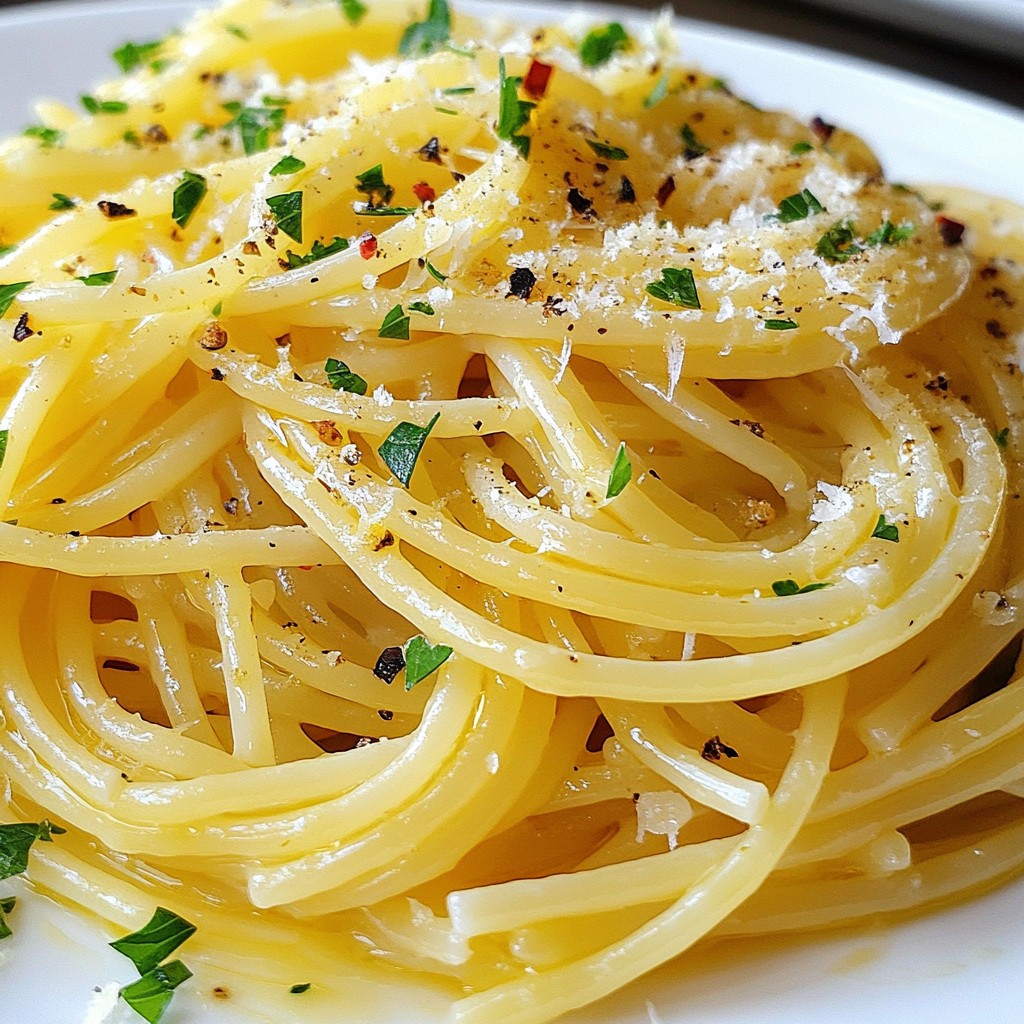
If you crave a simple yet delicious meal, look no further than Spaghetti Aglio e Olio. This classic Italian dish combines just a few ingredients: spaghetti, garlic, oil, and red pepper flakes. It's quick to prepare and perfect for any night. In this post, I'll share the best tips, variations, and storage ideas to make your Aglio e Olio an instant favorite. Let's dive into the heart of Italian comfort food!
Why I Love This Recipe
- Simple Preparation: This recipe requires minimal ingredients and steps, making it perfect for a quick weeknight dinner.
- Bold Flavors: The combination of garlic, red pepper flakes, and lemon zest creates a delightful explosion of flavor in every bite.
- Customizable: You can easily adjust the spice level and add ingredients like vegetables or proteins to suit your taste.
- Fresh and Vibrant: The addition of fresh parsley and lemon juice provides a refreshing contrast to the rich olive oil and garlic.
Ingredients
Main Ingredients for Spaghetti Aglio e Olio
To make a great Spaghetti Aglio e Olio, you need just a few key ingredients:
- 400g spaghetti
- 6 garlic cloves, thinly sliced
- 1/2 cup extra virgin olive oil
- 1 teaspoon red pepper flakes (adjust to taste)
- Zest of 1 lemon
- Juice of 1 lemon
- 1/4 cup fresh parsley, finely chopped
- Salt and freshly ground black pepper to taste
These ingredients come together to create a simple yet tasty dish.
Recommended Quality and Freshness
Choose high-quality extra virgin olive oil. Fresh olive oil enhances the flavor of your sauce. Use fresh garlic, as it adds a robust taste. The lemon should be ripe for the best zest and juice. Fresh parsley brightens the dish and adds color.
Optional Add-Ons
You can add grated Parmesan cheese for a rich finish. It melts nicely and adds creaminess. Another option is to serve with a lemon wedge. This gives you more zest if you want it. For spice lovers, sprinkle extra red pepper flakes on top. These add heat and visual appeal.
Step-by-Step Instructions
Cooking the Spaghetti
Start by bringing a large pot of salted water to a boil. The salt helps flavor the pasta. Once the water boils, add 400g of spaghetti. Cook it for about 8-10 minutes, or until it is al dente. This means it should be firm but not hard. While the pasta cooks, keep an eye on the time. You want it just right!
Sautéing the Garlic and Red Pepper Flakes
In a large skillet, pour in 1/2 cup of extra virgin olive oil. Set the heat to medium. Once the oil is hot, add 6 thinly sliced garlic cloves. Sauté them for about 2-3 minutes. Stir often. You want the garlic to turn golden brown and smell amazing. Be careful not to burn it, as burnt garlic tastes bitter. After the garlic is golden, sprinkle in 1 teaspoon of red pepper flakes. Stir for 30 seconds. This toasts the flakes and brings out their flavor.
Combining Ingredients for Flavor
Remove the skillet from the heat. Mix in the zest and juice of 1 lemon. This adds a fresh, zesty flavor that brightens the dish. Once the spaghetti is done, save about 1 cup of the pasta water before draining it. Add the hot, drained spaghetti to the skillet with the garlic and oil mixture. Toss everything well. Add a splash of reserved pasta water to help the sauce stick to the spaghetti. Finally, fold in 1/4 cup of finely chopped fresh parsley. Season with salt and freshly ground black pepper to taste. Serve right away. Enjoy!
Tips & Tricks
Achieving the Perfect Garlic Sauté
Start with fresh garlic. Thinly slice six cloves for the best flavor. Heat half a cup of extra virgin olive oil in a skillet over medium heat. Once the oil is hot, add the garlic slices. Stir frequently for two to three minutes. You want the garlic to turn golden, not burnt. Burnt garlic tastes bitter and ruins your dish.
Adjusting Spice Levels to Taste
Red pepper flakes add heat. Start with one teaspoon, then taste. If you want more spice, add more flakes. Remember, you can always add but can't take away. Consider your guests. Some may prefer milder flavors.
Serving Suggestions for Visual Appeal
Presentation matters. Serve your spaghetti on warm plates. Add a sprinkle of fresh parsley for color. A lemon wedge on the side adds a zesty touch. For cheese lovers, a shower of grated Parmesan can elevate the dish. Consider a sprinkle of extra red pepper flakes for those who enjoy heat. Make your dish inviting, and it will taste even better.
Pro Tips
- Perfect Pasta Texture: Always cook your spaghetti al dente for the best texture. It should be firm to the bite and will continue to cook slightly when mixed with the hot oil.
- Garlic Flavor Control: For a milder garlic flavor, sauté the garlic until just golden. If you prefer a more robust taste, allow it to brown a little longer, but be careful not to burn it.
- Custom Spice Level: Adjust the amount of red pepper flakes to your taste. Start with a smaller amount and add more if you prefer a spicier kick.
- Freshness Matters: Use fresh parsley and freshly grated lemon zest for the best flavor. Dried herbs and bottled lemon juice can dull the dish's vibrant taste.
Variations
Additional Ingredients for Unique Twists (e.g., Cherry Tomatoes or Shrimp)
Adding ingredients can change the taste of Spaghetti Aglio e Olio. Cherry tomatoes offer a sweet burst of flavor. You can halve them and toss them in while the pasta cooks. Their juice mixes well with the garlic oil. Shrimp brings a nice protein boost. Sauté shrimp in the oil before adding garlic. This adds depth and a lovely sea taste.
Vegetarian and Vegan Options
You can make this dish vegetarian easily. Just skip the Parmesan cheese. For a vegan twist, use nutritional yeast instead. It gives a cheesy flavor without dairy. You can also add more veggies. Spinach or broccoli can work well. Stir them in right before serving for a fresh touch.
Gluten-Free Substitutes
If you need a gluten-free option, use gluten-free spaghetti. Many brands offer good texture and taste. You cook it the same way as regular pasta. Just keep an eye on cooking time. Another option is using zucchini noodles. They are light and healthy. Just spiralize the zucchini and sauté it briefly. This keeps it crisp and fresh while still tasting great.
Storage Info
Storing Leftovers Properly
To keep your spaghetti aglio e olio fresh, store it in an airtight container. Make sure it cools down first. You can keep it in the fridge for up to three days. If you have leftover garlic oil, store it in a separate jar.
Reheating Instructions for Best Results
When it's time to enjoy your leftovers, reheat them gently. You can use a skillet over medium heat. Add a splash of water or olive oil to prevent sticking. Stir often until hot. Avoid using the microwave, as it can make the pasta rubbery.
Freezing Tips for Long-Term Storage
If you want to save spaghetti aglio e olio for later, freezing is a great option. Place the cooled pasta in a freezer-safe bag. Squeeze out all the air before sealing. It can last up to three months in the freezer. To reheat, thaw it overnight in the fridge and use the skillet method.
FAQs
What is the best type of pasta for Aglio e Olio?
The best type of pasta for Aglio e Olio is spaghetti. It holds the oil and garlic well. You can also use linguine or fettuccine if you prefer. Both options work nicely.
Can I use pre-minced garlic?
Yes, you can use pre-minced garlic. However, fresh garlic gives the best flavor. It has a stronger taste and aroma. Fresh garlic also caramelizes better in the oil, adding depth to the dish.
How can I make this dish spicier or milder?
To make it spicier, add more red pepper flakes. Start with a pinch and taste the dish. For a milder version, reduce the flakes or skip them altogether. You can also add more olive oil to balance the heat.
What can I pair with Spaghetti Aglio e Olio?
Pair this dish with a fresh salad or garlic bread. A simple arugula salad adds a nice peppery touch. You can also serve it with grilled chicken or shrimp for added protein. Enjoy with a light white wine for a complete meal.
Spaghetti Aglio e Olio is simple yet full of flavor. We covered the key ingredients, cooking steps, and helpful tips for the best results. You learned how to add personal twists to this dish. Don't forget about storage for leftovers or reheating. Make this dish your own, whether by adding shrimp or adjusting spice levels. With the right care, you can enjoy Aglio e Olio fresh or as leftovers. Embrace your cooking journey and keep experimenting!