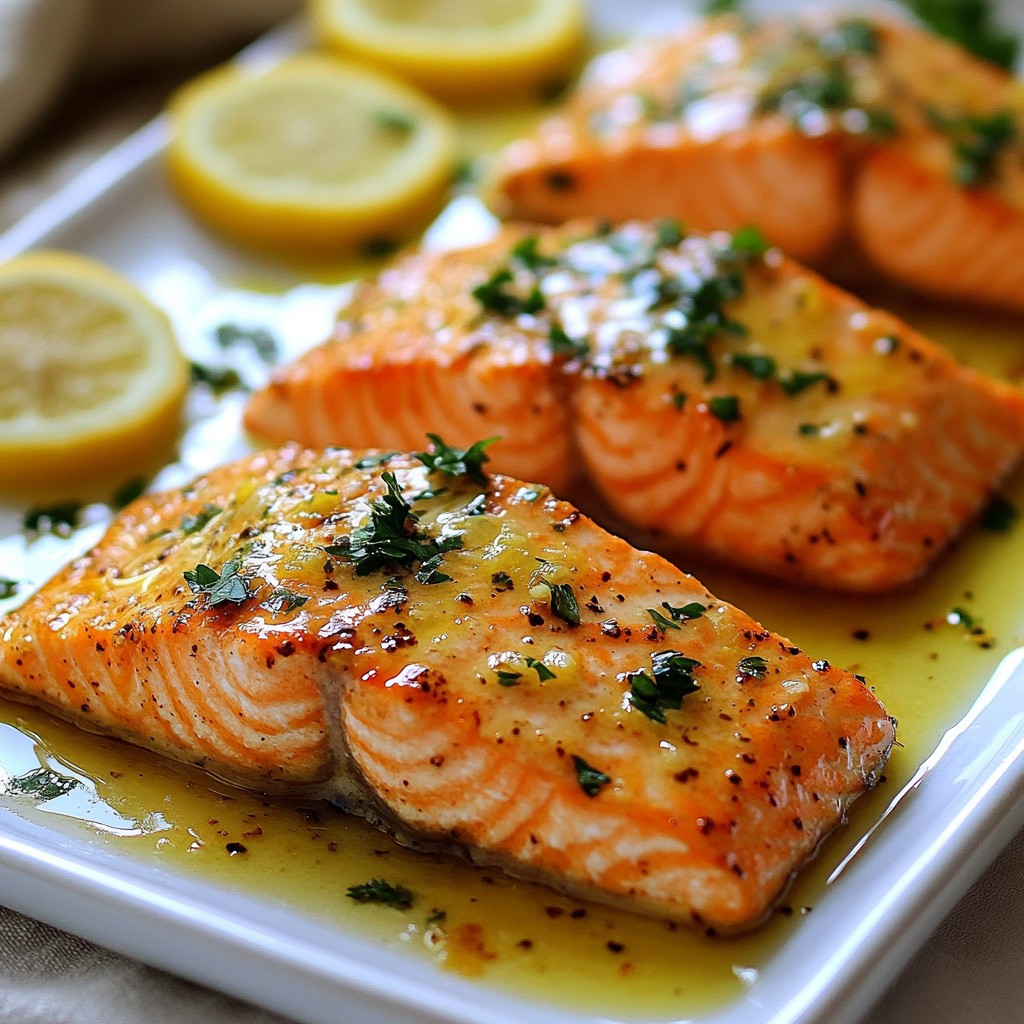
If you're craving a quick, delicious meal, this Skillet Lemon Garlic Salmon recipe is for you! In under 30 minutes, you can whip up savory salmon, enriched with zesty lemon and garlic. I’ll guide you through easy steps, share tips for perfect cooking, and offer tasty variations. Whether you're a beginner or a seasoned cook, this dish will impress. Let’s dive into the flavorful world of salmon!
Why I Love This Recipe
- Quick and Easy: This recipe comes together in just 20 minutes, making it perfect for busy weeknights or last-minute dinner parties.
- Fresh and Flavorful: The combination of lemon and garlic creates a vibrant sauce that enhances the natural flavors of the salmon.
- Healthy and Nutritious: Salmon is packed with omega-3 fatty acids, making this dish a healthy choice for any meal.
- Versatile Serving Options: This dish pairs beautifully with a variety of sides, from steamed vegetables to fluffy rice, allowing for endless meal possibilities.
Ingredients
List of Ingredients
- 4 salmon fillets (approximately 6 oz each)
- 3 tablespoons extra virgin olive oil
- 4 cloves garlic, finely minced
- Juice and zest from 2 fresh lemons
- 1 teaspoon Dijon mustard
- Salt and freshly ground black pepper to taste
- 1 tablespoon fresh parsley, finely chopped (for garnish)
- Lemon slices (for serving)
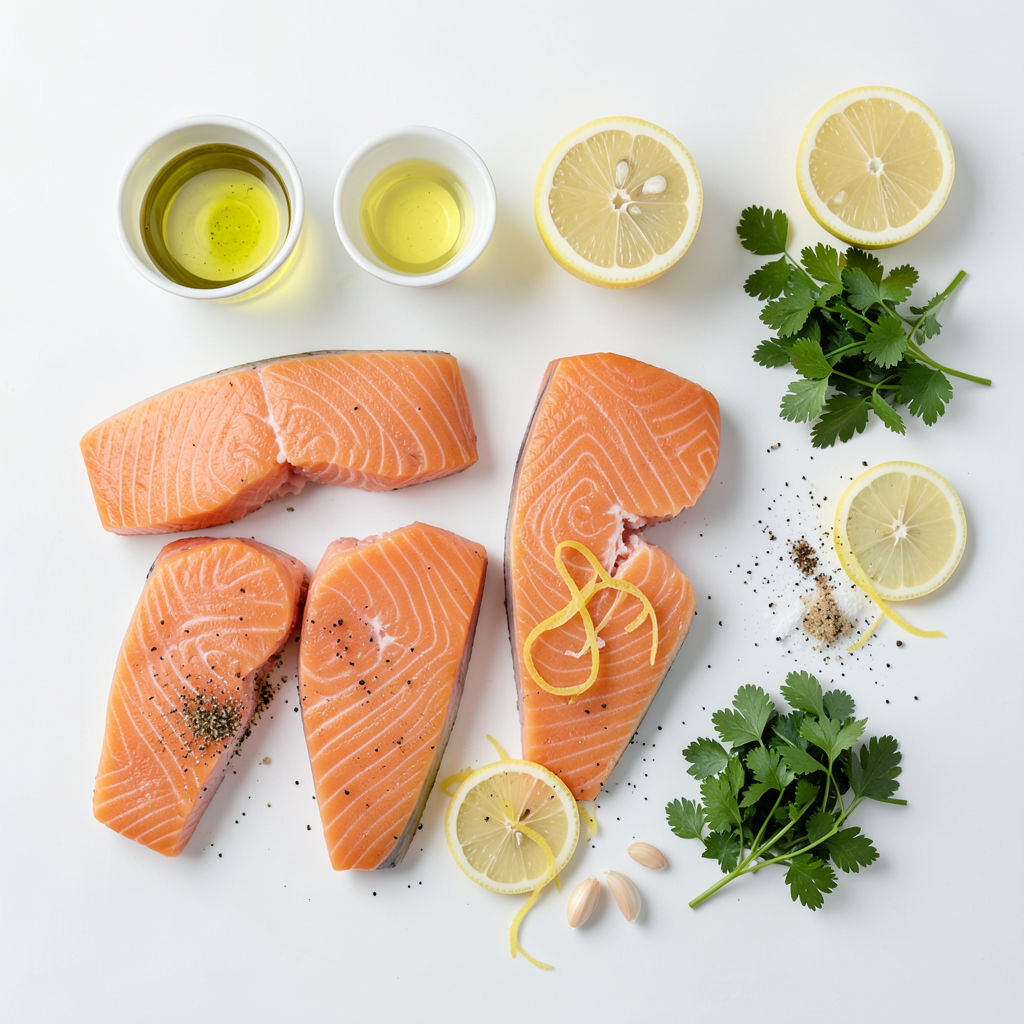
To make Skillet Lemon Garlic Salmon, you need fresh salmon fillets. They should weigh about six ounces each. Look for bright color and firm texture. Olive oil gives a rich flavor and helps cook the salmon perfectly. You will use three tablespoons in total.
Garlic adds a punch to the dish. I use four cloves, finely minced. You want that strong garlic taste to shine through. Fresh lemons bring zest and juice to the sauce. You'll need two lemons for both juice and zest.
Dijon mustard adds a nice tang. Just one teaspoon is enough for balance. Don't forget salt and black pepper for seasoning. You can adjust these to your taste.
Finally, a sprinkle of fresh parsley brightens the plate and gives it a pop of color. Slice some lemon for serving. It not only looks good but also enhances the taste when you squeeze it on top.
Gather these ingredients, and you’re ready to create a delicious meal!
Step-by-Step Instructions
Preparation Steps
1. First, pat the salmon fillets dry with paper towels. This step helps the seasoning stick well.
2. Season both sides of the salmon with salt and freshly ground black pepper. This adds great flavor to the fish.
3. In a large non-stick skillet, heat 2 tablespoons of extra virgin olive oil over medium-high heat. Wait until the oil shimmers but does not smoke.
4. Gently place the salmon fillets in the skillet, skin-side down if they have skin. Cook for about 4-5 minutes. You know they are ready to flip when the skin is crispy and the salmon is halfway cooked.
5. Carefully flip the fillets using a spatula. Cook for another 3-4 minutes. The salmon should be cooked through but still moist. Remove the fillets and set them aside on a plate.
Sauce Preparation
1. Without cleaning the skillet, lower the heat to medium. Add the remaining tablespoon of olive oil.
2. Now, add the minced garlic and sauté for about 30 seconds. Stir constantly to avoid burning the garlic. It should smell amazing!
3. Pour in the fresh lemon juice and lemon zest. Add the Dijon mustard and whisk until mixed well. Let this simmer for 1-2 minutes to blend the flavors.
Final Cooking Steps
1. Return the cooked salmon fillets to the skillet. Spoon the zesty lemon-garlic sauce generously over each piece.
2. Let them simmer in the sauce for about 1 more minute. This helps the salmon absorb all that delicious flavor.
3. To serve, plate the salmon fillets. Drizzle the remaining sauce from the skillet on top.
4. Finish with a sprinkle of freshly chopped parsley and serve with lemon slices on the side. This adds color and a fresh taste!
Tips & Tricks
Selecting the Best Salmon
When choosing salmon, freshness is key. Look for bright, vibrant color. The flesh should be moist and firm to the touch. Avoid any fish that has a dull color or smells overly fishy.
You can choose between farmed and wild-caught salmon. Wild-caught salmon usually has a richer flavor and firmer texture. It may cost more, but many find it worth it. Farmed salmon is often easier to find and may be less expensive. It can still be delicious if prepared well.
Cooking Techniques
To ensure perfect doneness, keep an eye on the salmon while cooking. Start with medium-high heat and cook for about 4-5 minutes on the first side. When the fish turns opaque halfway up, it's time to flip. The second side will need only 3-4 minutes. Use a spatula to flip gently to avoid breaking the fillet.
For crispy skin, make sure the skillet is hot before adding the salmon. Pat the fillets dry with paper towels to remove excess moisture. This helps the skin crisp up nicely.
Sauce Enhancements
You can add herbs or spices to customize the sauce. Fresh dill or basil pairs well with lemon and garlic. If you want some heat, try adding a pinch of red pepper flakes. This simple twist can elevate the dish and make it your own.
Experiment with different flavors. A splash of white wine or a teaspoon of honey can add depth and sweetness. Don't be afraid to get creative with your sauce!
Pro Tips
- Choose Fresh Salmon: Opt for fresh, high-quality salmon fillets for the best flavor and texture. Look for vibrant color and a clean, ocean-like smell.
- Don’t Overcook: Salmon is best when it’s cooked just until opaque and flaky. Use a meat thermometer to check for an internal temperature of 145°F (63°C).
- Enhance the Sauce: Feel free to add a splash of white wine or a teaspoon of honey to the sauce for an extra layer of flavor that complements the lemon and garlic.
- Variations: Experiment with different herbs like dill or thyme in place of parsley, or add some red pepper flakes for a spicy kick!
Variations
Ingredient Substitutions
If you want to switch up the fish, you can use other options. Here are some ideas:
- Trout: A similar flavor and texture to salmon.
- Tilapia: A mild fish that cooks quickly.
- Cod: Firm and holds up well in the skillet.
If you need a dairy-free option, skip the Dijon mustard. You can use a splash of apple cider vinegar for a tangy kick.
Flavor Additions
To enhance the taste, think about adding more citrus or herbs:
- Lime or orange zest: These bring a fresh twist.
- Fresh herbs: Basil, dill, or thyme can add depth.
For those who like some heat, sprinkle chili flakes on the salmon. This adds a nice spicy kick without overpowering the dish.
Serving Suggestions
Pair your skillet lemon garlic salmon with side dishes for a complete meal:
- Steamed vegetables: Broccoli or asparagus work well.
- Rice or quinoa: These grains soak up the sauce nicely.
You can also serve the salmon over a bed of fresh greens. Top with a light vinaigrette for a refreshing salad.
Storage Info
Storing Leftovers
To keep your Skillet Lemon Garlic Salmon fresh, place leftovers in an airtight container. This helps prevent moisture loss and keeps the salmon tasty. Store it in the fridge for up to three days. Always let it cool to room temperature before sealing. Avoid storing warm salmon to prevent condensation.
Reheating Tips
When reheating salmon, you want to keep it moist. The oven works well for this. Preheat your oven to 275°F (135°C). Place the salmon on a baking sheet, cover it with foil, and heat for about 15 minutes. This method warms the salmon evenly without drying it out. If you're in a hurry, use a microwave. Place the salmon in a microwave-safe dish and cover it loosely with a lid. Heat it in short bursts of 30 seconds until warm.
Freezing Guidelines
To freeze salmon, wrap it tightly in plastic wrap or aluminum foil. Place it in a freezer bag, squeezing out as much air as possible. Label the bag with the date. You can freeze your salmon for up to three months. When you’re ready to eat it, thaw the salmon in the fridge overnight. Avoid thawing at room temperature to keep it safe.
FAQs
How can I make this recipe gluten-free?
To make this skillet lemon garlic salmon gluten-free, you can simply skip the Dijon mustard. Many mustards contain gluten. Instead, use a gluten-free mustard or add a bit of honey for sweetness. Always check labels to ensure your ingredients are gluten-free.
What can I serve with Skillet Lemon Garlic Salmon?
I love serving this dish with several options. Here are some great sides:
- Steamed broccoli
- Garlic mashed potatoes
- Quinoa salad
- Roasted asparagus
- A fresh green salad
These sides pair well and add balance to the meal.
Can I use canned salmon for this recipe?
Yes, you can use canned salmon, but the texture will be different. Canned salmon is softer and lacks the crispiness of fresh fillets. If you choose this route, drain the canned salmon and gently heat it in the sauce. This will help incorporate the lemon-garlic flavor.
How do I know when the salmon is fully cooked?
To check if the salmon is done, look for a few signs:
- The salmon should be opaque and flaky.
- It should easily flake with a fork.
- A safe internal temperature is 145°F (63°C).
Using a food thermometer is the best way to ensure it's cooked correctly.
This blog post covered how to make delicious Skillet Lemon Garlic Salmon. We talked about the key ingredients, step-by-step cooking instructions, and helpful tips. You also learned about variations and how to store leftovers properly.
Cooking salmon can seem tricky, but it’s easy once you try it. Remember, using fresh ingredients makes a big difference in flavor. Enjoy your cooking journey and don’t hesitate to try different flavors. You’ll impress everyone with your skills.