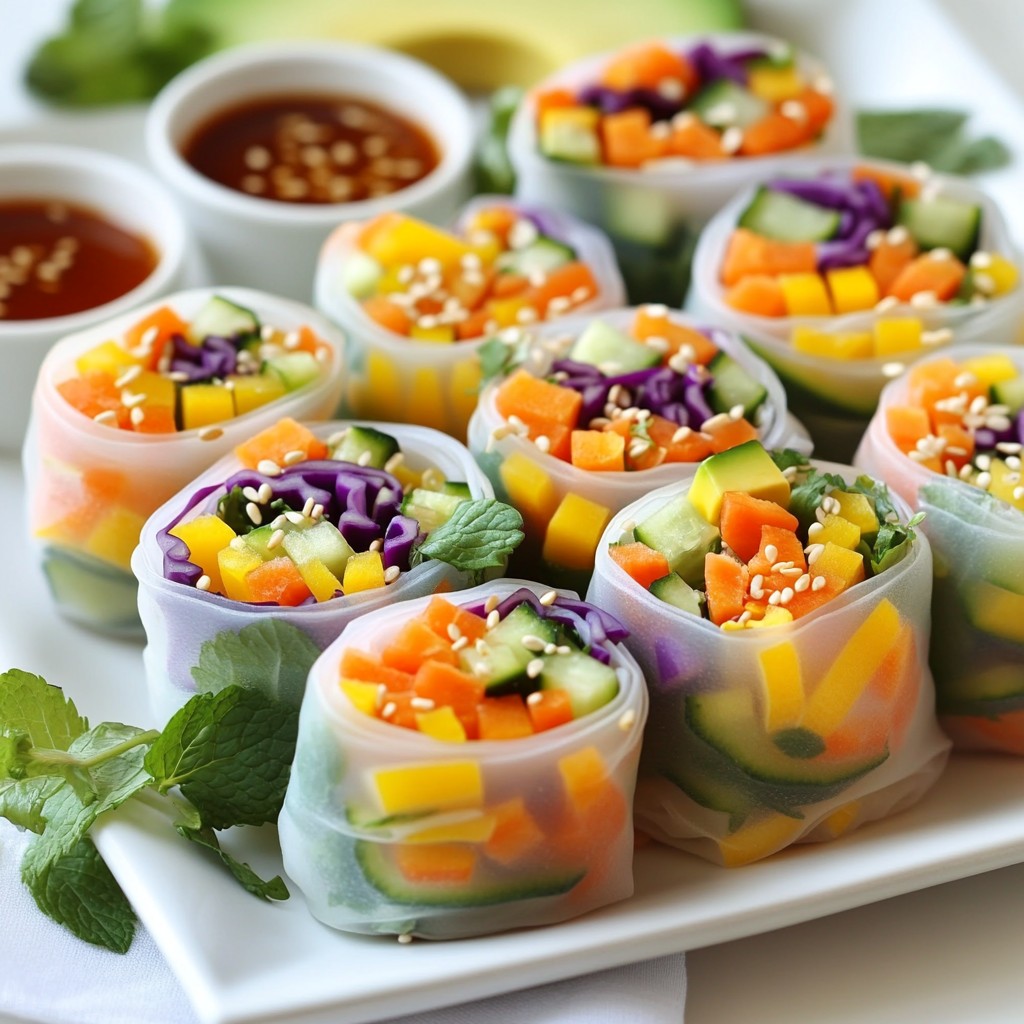
Looking to brighten up your meals? Try these Rainbow Veggie Spring Rolls! Packed with fresh vegetables and vibrant herbs, they are not just a feast for the eyes but also a healthy treat. In this post, I'll guide you through the easy steps to create these colorful rolls, share tips for rolling without breaking, and suggest tasty dips. Get ready to impress your family and friends with this delicious dish!
Why I Love This Recipe
- Fresh and Vibrant: These spring rolls are packed with colorful, fresh vegetables that not only look beautiful but are also bursting with flavor.
- Healthy and Nutritious: With a variety of veggies and herbs, these rolls are a great source of vitamins, minerals, and healthy fats from the avocado.
- Customizable: You can easily swap in your favorite vegetables or add proteins like shrimp or tofu to make these spring rolls your own.
- Fun to Make: Rolling your own spring rolls can be a fun activity to do with family or friends, making for a great interactive meal.
Ingredients
List of Ingredients
- Rice paper wrappers
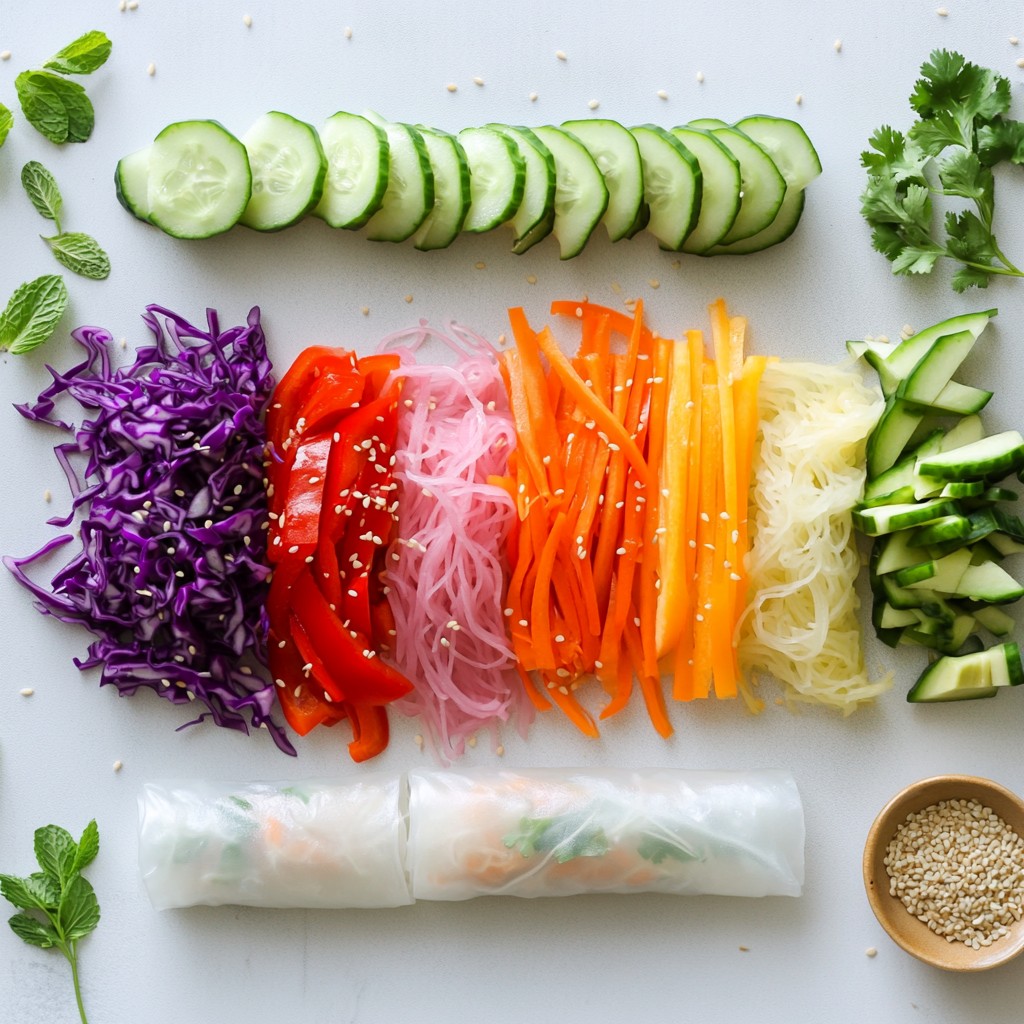
- Variety of vegetables (bell peppers, cucumber, carrots, purple cabbage, avocado)
- Fresh herbs (mint, cilantro)
- Vermicelli noodles
- Optional garnishes (sesame seeds)
- Dipping sauces (soy sauce, peanut sauce)
Gathering fresh ingredients is key to making tasty Rainbow Veggie Spring Rolls. First, you need rice paper wrappers. These wrappers hold everything together. They are thin and flexible.
Next, pick a colorful mix of vegetables. I like to use:
- 1 cup bell peppers (red, yellow, green), julienned
- 1 cup cucumber, julienned
- 1 cup carrots, julienned
- 1 cup purple cabbage, thinly sliced
- 1 ripe avocado, sliced
These veggies add crunch and color. They also provide different flavors.
Fresh herbs give the rolls a burst of taste. I recommend:
- 1/2 cup fresh mint leaves
- 1/2 cup fresh cilantro leaves
Next, you need vermicelli noodles. They add a chewy texture. Use about 1/2 cup, cooked and cooled.
For a little extra crunch, you can sprinkle 1/4 cup of sesame seeds on top. This is optional but tasty!
Finally, serve with dipping sauces. Soy sauce gives a salty flavor. Peanut sauce adds creaminess. Both are great choices for dipping.
With these ingredients, you can make a dish that is healthy, colorful, and fun to eat!
Step-by-Step Instructions
Preparing Ingredients
Start by washing all your vegetables and herbs well. This step keeps them fresh and clean. Peel the carrots and cut all the vegetables into thin strips. Make sure they are uniform. This helps with the flavor of each spring roll. Don’t forget to slice the avocado too. Next, cook the vermicelli noodles according to the package instructions. Once they are done, drain and cool them.
Soaking Rice Paper Wrappers
To soften the rice paper, fill a shallow dish with warm water. Dip one rice paper wrapper into the water for about 10-15 seconds. You want it to become soft and flexible. Once ready, carefully lift it out and lay it flat on a clean surface. Be gentle to avoid tearing the wrapper.
Assembling the Spring Rolls
Now it's time to layer your filling. In the lower third of the softened rice paper, put a small handful of cooled vermicelli noodles. On top of the noodles, add a colorful mix of julienned bell peppers, cucumber, carrots, and purple cabbage. Don’t forget the avocado slices! Place a few mint and cilantro leaves on top for extra flavor.
Next, fold the left and right edges of the rice paper over the filling. Start rolling from the bottom, tucking in the filling as you go. Make sure to roll it snugly. Repeat this with the remaining ingredients until you have all your spring rolls ready.
Final Touches
Once you finish rolling, take a sharp knife. Cut each spring roll diagonally in half. This shows off the vibrant colors inside. For a lovely presentation, fan out the spring rolls on a nice platter. You can sprinkle sesame seeds for a crunchy touch. Place small bowls of soy sauce or peanut sauce next to the rolls for dipping. Enjoy your beautiful and healthy creation!
Tips & Tricks
Rolling Techniques
- Avoiding breakage: To prevent your rice paper from tearing, soak it just enough. Dip it in warm water for about 10-15 seconds. The wrapper should be soft yet firm. If it feels too soft, it may break.
- Ensuring a tight roll: Start rolling from the bottom. Tuck the filling in gently but firmly. Fold the sides over the filling while rolling. This keeps everything secure and prevents spills.
Customizing the Recipe
- Substitutions for dietary preferences: You can swap out veggies based on what you like. Try adding zucchini or radishes for crunch. For a fresh twist, use mango or pineapple.
- Adding protein options: Want to make your spring rolls heartier? Add shrimp, tofu, or chicken. Cooked and cooled proteins fit well with the fresh veggies.
Serving Suggestions
- Ideal accompaniments: Serve your spring rolls on a large platter. Pair with colorful dipping bowls. They look great and make sharing easy.
- Best dips for flavor enhancement: Soy sauce is a classic choice. For creaminess, try peanut sauce. Both enhance the fresh flavors of your spring rolls. Enjoy with friends!
Pro Tips
- Use Fresh Ingredients: The quality of your vegetables and herbs can significantly impact the flavor of your spring rolls. Always opt for the freshest produce you can find for the best taste and texture.
- Customize Your Fillings: Feel free to get creative with your fillings! You can add proteins like shrimp or tofu, or experiment with other vegetables such as radishes or snap peas to suit your taste.
- Keep Rice Paper Moist: If you're assembling multiple spring rolls, keep the rice paper wrappers moist by covering them with a damp cloth to prevent them from drying out while you work.
- Perfect Your Dipping Sauce: Elevate your spring rolls by making a homemade dipping sauce. Mix soy sauce with a dash of sesame oil, lime juice, and a hint of chili paste for a delicious kick.
Variations
Seasonal Vegetable Options
Using seasonal vegetables makes these spring rolls even better. Fresh, local veggies are full of flavor. In spring, try adding asparagus or snap peas. In summer, zucchini or radishes can add crunch. Fall brings sweet potatoes. In winter, consider brussels sprouts or root veggies.
For colorful replacements, think outside the box. Swap bell peppers for colorful heirloom tomatoes. Use bright orange or yellow carrots for a pop of color. You can even add spinach or kale for a green boost. Mix and match what’s available to keep it fun!
Spicy Additions
If you like heat, add some spicy elements. Chili sauce or sriracha gives a nice kick. You can mix it with your dipping sauce for an extra flavor boost. If you want more heat, slice jalapeños thin and add them inside the roll. They bring a fresh taste!
For alternate dipping sauce flavors, try mixing soy sauce with some lime juice and a dash of sesame oil. A peanut sauce mixed with a pinch of cayenne can also add warmth. Get creative and find what you enjoy most!
Storage Info
Refrigerating Spring Rolls
To keep your rainbow veggie spring rolls fresh, wrap them in damp paper towels. Place them in an airtight container. Store them in the fridge and use them within two days. This method helps keep the rice paper soft and the veggies crisp. Avoid stacking them directly on top of each other to prevent sticking. You can also place a layer of parchment paper between each roll.
Freezing Spring Rolls
You can freeze spring rolls for later use. First, lay them out in a single layer on a baking sheet. Flash freeze for about an hour, then transfer them to a freezer bag. Remove as much air as possible to prevent freezer burn. When you’re ready to eat, thaw them overnight in the fridge. For reheating, you can bake them in an oven at 350°F for about 10 minutes. This keeps them crispy. Avoid microwaving, as it can make them soggy.
FAQs
How long do homemade spring rolls last?
Homemade spring rolls last about 2 to 3 days in the fridge. Keep them in an airtight container. This helps keep them fresh and crunchy. After a few days, the rice paper may get too soft.
Can I make spring rolls ahead of time?
Yes, you can make spring rolls ahead of time. Assemble them and place them in the fridge. Just be sure to cover them with a damp cloth or plastic wrap. This keeps them from drying out.
What can I use instead of rice paper?
You can use lettuce leaves if you don’t have rice paper. Butter lettuce works well for this. It adds a nice crunch and fresh taste. You can also try using nori sheets for a different flavor.
Are spring rolls gluten-free?
Yes, spring rolls can be gluten-free. Rice paper is usually gluten-free. Just make sure your dipping sauce is gluten-free too, as some soy sauces contain gluten.
How do you make spring rolls less soggy?
To make spring rolls less soggy, do not over-soak the rice paper. Soak it just until it's soft but still firm. Also, avoid adding too much filling. This helps keep them nice and fresh.
Can I add cooked protein to my spring rolls?
Yes, you can add cooked protein to your spring rolls. Shrimp, chicken, or tofu are great options. Just chop them into small pieces and layer them with the veggies. This makes the spring rolls more filling.
We’ve explored creating fresh spring rolls with simple ingredients and clear steps. You learned to prepare the filling, soak rice paper, roll the wraps, and serve them. I shared tips for customizing your rolls, how to store them, and some great variations. With these skills, you can enjoy tasty spring rolls that suit your taste. Try different veggies and flavors to keep it fun. This dish is as versatile as it is delicious. Enjoy your spring roll-making journey!