Looking for a fresh and fun snack? Rainbow Veggie Spring Rolls are colorful and full of crunch! In this article, I'll share step-by-step instructions on how to make these tasty delights. You'll learn about essential ingredients, rolling techniques, and smart storage tips. Plus, I'll provide ideas for variations and dipping sauces to suit your taste. Let’s dive into this healthy treat that’s as good for your eyes as it is for your palate!
Why I Love This Recipe
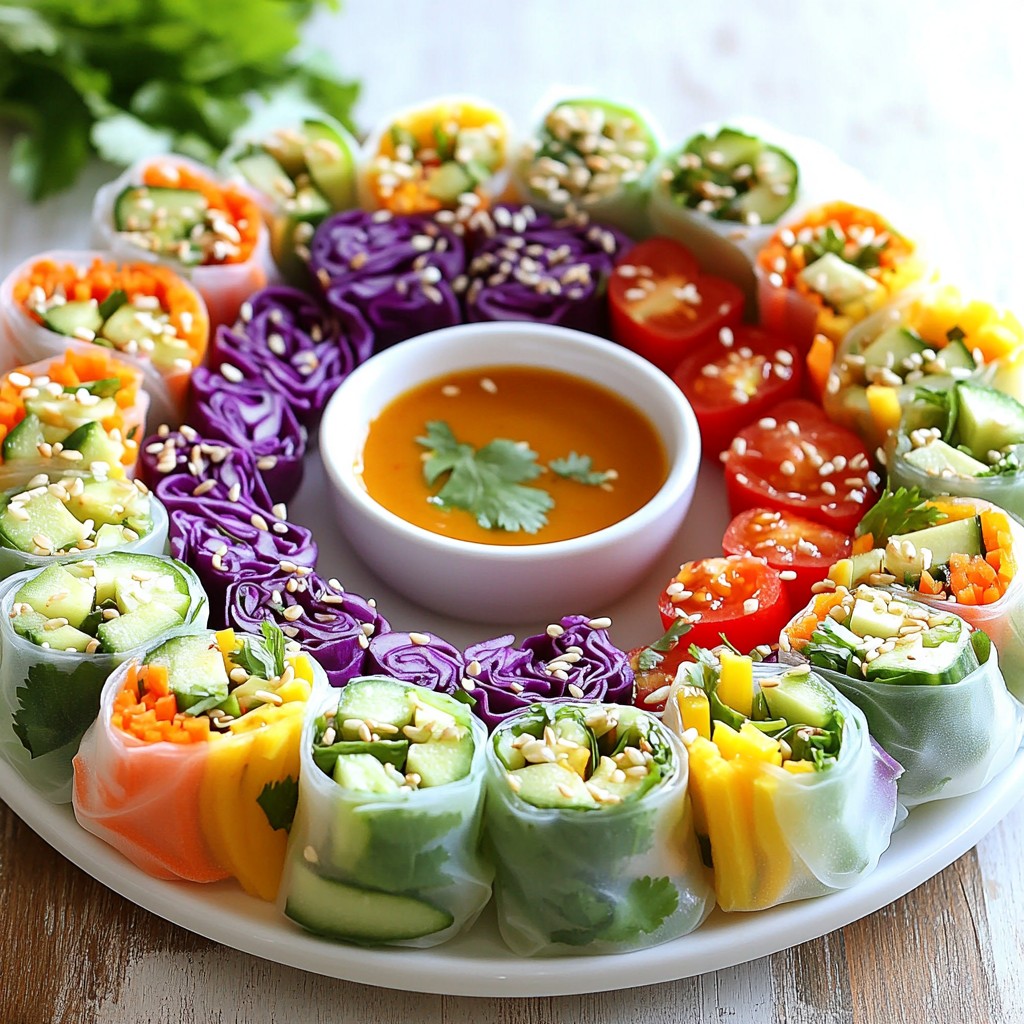
- Vibrant Colors: The array of colorful vegetables makes these spring rolls not only visually appealing but also packed with nutrients and flavor.
- Fresh Ingredients: I love how this recipe emphasizes fresh herbs and vegetables, providing a refreshing crunch in every bite.
- Customizable: You can easily adapt the filling to your preference, allowing for endless combinations of flavors and textures.
- Healthy Snack: These spring rolls are a guilt-free snack or appetizer, making them perfect for any occasion without the extra calories.
Ingredients
List of Essential Ingredients
To make your rainbow veggie spring rolls, gather these key ingredients:
- 8 rice paper sheets
- 1 cup purple cabbage, finely shredded
- 1 cup carrots, cut into thin matchsticks
- 1 cup cucumber, cut into thin matchsticks
- 1 cup red bell pepper, thinly sliced
- 1 cup ripe avocado, sliced
- 1 cup fresh mint leaves, roughly chopped
- 1 cup fresh cilantro leaves, roughly chopped
These ingredients bring color and taste to your rolls. Each veggie adds its own crunch and flavor.
Optional Garnishes and Dipping Sauces
You can enhance your spring rolls with some fun garnishes and dips:
- 1/4 cup sesame seeds (for garnish)
- Peanut sauce (a classic choice)
- Sweet chili sauce (for a spicy kick)
Adding sesame seeds gives a nice crunch. The sauces add a burst of flavor, making each bite better.
Nutritional Information of Key Ingredients
Each ingredient packs its own nutrition:
- Purple cabbage: High in vitamins K and C.
- Carrots: Full of beta-carotene and good for your eyes.
- Cucumbers: Hydrating and low in calories.
- Red bell pepper: Rich in vitamin A and antioxidants.
- Avocado: Provides healthy fats for energy.
- Mint and cilantro: Offer fresh flavor and aid digestion.
These ingredients not only taste great, but they also nourish your body. Eating fresh veggies boosts your health.
Step-by-Step Instructions
Preparation of Vegetables
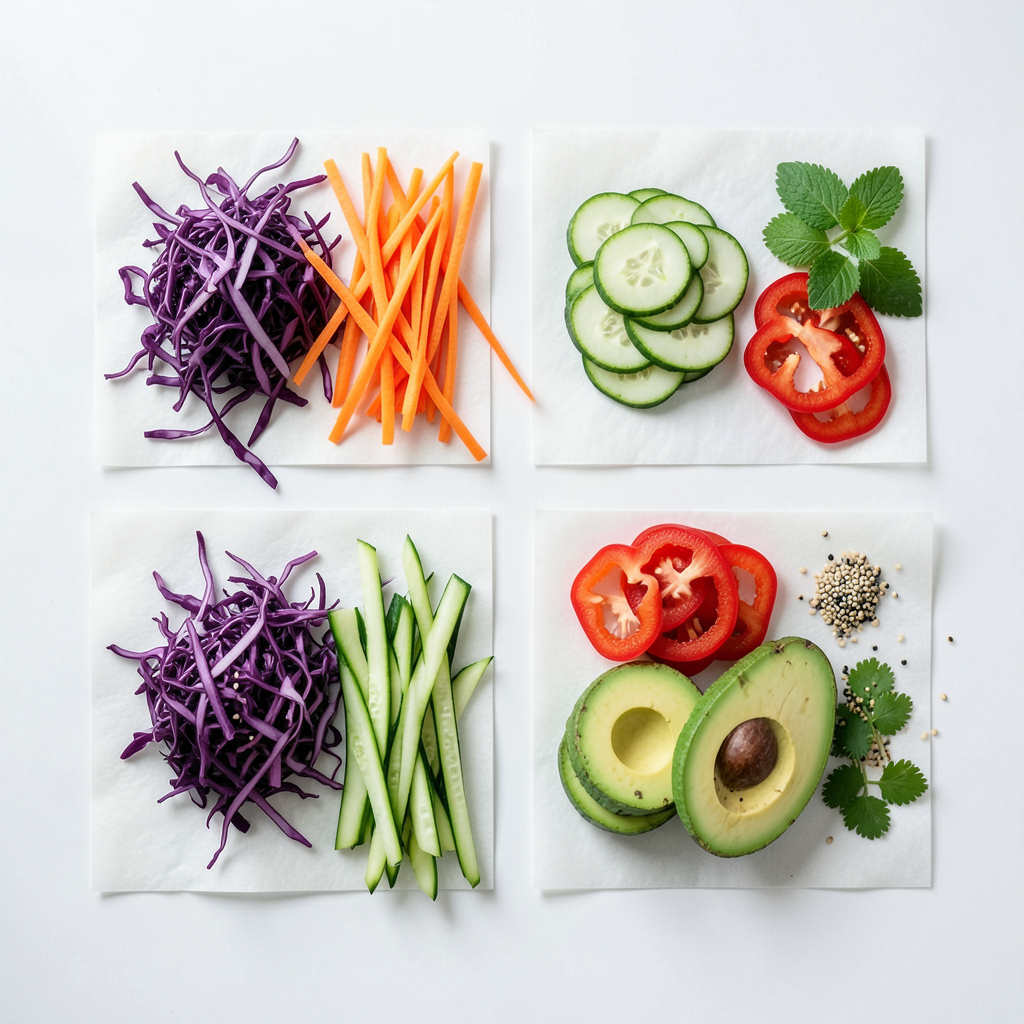
Start by washing all your veggies well. You need purple cabbage, carrots, cucumber, and red bell pepper. Peel the carrots and cucumber if you want. Cut the carrots and cucumber into thin matchsticks, also called julienne. Finely shred the purple cabbage and slice the avocado. Set all these colorful veggies aside so you can easily grab them when rolling.
Soaking and Preparing Rice Paper
Next, take a shallow dish and fill it with warm water. Make sure the water is deep enough to soak the rice paper sheets. Dip one rice paper sheet into the warm water for about 10 to 15 seconds. You want it soft but still a bit firm. If you soak it too long, it gets mushy. Carefully take the sheet out and lay it flat on a clean, damp kitchen towel or cutting board. Make sure it's smooth and free of wrinkles.
Rolling Techniques for Spring Rolls
Now comes the fun part—rolling! In the lower third of the rice paper, arrange a colorful row of the prepared veggies. Start with the purple cabbage, then add the carrots, cucumber, red bell pepper, and avocado. Don’t forget to sprinkle fresh mint and cilantro on top for extra flavor. Optionally, add sesame seeds for crunch.
To roll, fold the bottom edge of the rice paper over the filling. Then, fold the sides toward the center, making sure to secure the filling tightly. Roll it up to form a compact spring roll. Repeat this with the rest of the rice paper sheets and filling. Once you finish, serve your spring rolls with your favorite dipping sauce. Enjoy this vibrant snack!
Tips & Tricks
Best Practices for Rolling Spring Rolls
When rolling spring rolls, keep it simple. Use warm water to soften the rice paper. Soak each sheet for 10-15 seconds. It should be soft yet firm. Lay the rice paper on a damp towel. Arrange veggies in the lower third. Start with purple cabbage, then add carrots, cucumber, bell pepper, and avocado. Don’t forget the herbs! Fresh mint and cilantro add great flavor. Fold the bottom over the filling first. Tuck in the sides, then roll up tightly. This keeps all the goodness inside.
How to Store Leftover Spring Rolls
If you have leftover spring rolls, wrap them well. Use plastic wrap or a sealed container. Keep them in the fridge. They taste best within a day or two. If the rice paper dries out, it can become tough. To rehydrate, you can dip them in warm water for a few seconds before serving. Avoid freezing, as it changes the texture.
Techniques for Cutting Vegetables
Cutting vegetables is key to great spring rolls. Start with a sharp knife. For carrots and cucumbers, peel if you like. Cut them into thin matchsticks, called julienne. This helps with even cooking and easy rolling. Shred purple cabbage finely for a delicate crunch. Slice the red bell pepper thinly for a pop of color. Keep your cuts uniform for neat rolls and easy eating.
Pro Tips
- Keep Rice Paper Moist: Make sure to keep the rice paper sheets covered with a damp cloth while you are working. This prevents them from drying out and becoming hard to roll.
- Variety of Fillings: Feel free to get creative with your fillings! You can add ingredients like shredded chicken, shrimp, or even tofu for a protein boost.
- Chill Before Serving: For the best flavor and texture, let the spring rolls chill in the refrigerator for about 15 minutes before serving. This helps the flavors meld together.
- Experiment with Dips: While peanut sauce and sweet chili sauce are great, try serving with hoisin sauce, soy sauce, or a tangy vinaigrette for a different twist.
Variations
Adding Protein Options (Tofu, Shrimp, etc.)
You can boost your spring rolls by adding protein. Tofu is a great choice. It absorbs flavors well and adds a nice texture. Cut firm tofu into strips. Sauté it lightly before adding it to your rolls. Shrimp is another tasty option. Cook the shrimp until pink, then slice them before rolling. Both options make your spring rolls more filling and satisfying.
Alternative Vegetables for Seasonal Variations
Feel free to mix up the veggies based on the season. In summer, try using zucchini or bell peppers for crunch. In winter, swap in roasted sweet potatoes or butternut squash for warmth. You can also add leafy greens like spinach or arugula for extra nutrients. The key is to keep it colorful and fresh.
Different Dipping Sauce Ideas
The right dipping sauce can make your spring rolls shine. Peanut sauce is a classic choice, with its creamy and nutty flavor. Sweet chili sauce adds a sweet and spicy kick. For a lighter option, try a soy sauce with lime juice. You can even mix yogurt with herbs for a tangy dip. Experiment with flavors to find your favorite!
Storage Info
How to Properly Store Spring Rolls
To keep your rainbow veggie spring rolls fresh, wrap them tight. Use plastic wrap or a damp paper towel. Place them in an airtight container. Store them in the fridge. They stay best for 1-2 days. If you notice any moisture, change the wrap. This helps prevent sogginess.
Freezing Guidelines for Spring Rolls
You can freeze spring rolls to enjoy later. First, prepare them as usual but do not cut. Place each roll on a tray, not touching, and freeze for 1-2 hours. Once frozen, transfer them to a freezer-safe bag. They last for up to 3 months. To serve, thaw in the fridge overnight before enjoying.
Shelf Life and Best Practices
The shelf life of fresh spring rolls is about 2 days in the fridge. After that, they can become soggy. For the best taste, eat them soon after making. If you want to store them longer, freezing is the best option. Always check for any strange smells or changes in texture before eating.
FAQs
How do you make spring rolls without them sticking?
To prevent sticking, keep your rice paper wet but not too soggy. Dip each sheet in warm water for 10-15 seconds. Lay it flat on a clean surface. You can also use a damp towel to help. This keeps the rolls from sticking together.
Can I prepare spring rolls in advance?
Yes, you can prepare spring rolls ahead of time. Make them a few hours before serving. Just keep them covered with a damp cloth or plastic wrap. This helps keep them moist and fresh. Avoid stacking them to prevent sticking.
What is the best way to serve spring rolls?
Serve spring rolls on a large platter. Arrange them in a circle for a fun look. Place a small bowl of your favorite dipping sauce in the center. This allows easy access and adds to the colorful display.
Are rainbow veggie spring rolls healthy?
Absolutely! Rainbow veggie spring rolls are low in calories and packed with nutrients. They contain fresh vegetables that provide fiber, vitamins, and minerals. Plus, they are mostly made from whole foods, making them a great snack choice.
Can spring rolls be made gluten-free?
Yes, spring rolls can easily be made gluten-free. Rice paper is naturally gluten-free. Just ensure your dipping sauce is also gluten-free. Many sauces can be found that fit this diet, like tamari instead of soy sauce.
Making spring rolls is fun and rewarding. You need key ingredients, know the steps, and understand best storage practices. We discussed essential ingredients, preparation techniques, and ideas for storage.
As you try different fillings and sauces, enjoy the process. Your spring rolls can reflect your taste. Remember, practice makes perfect. Have fun crafting tasty rolls that impress!