
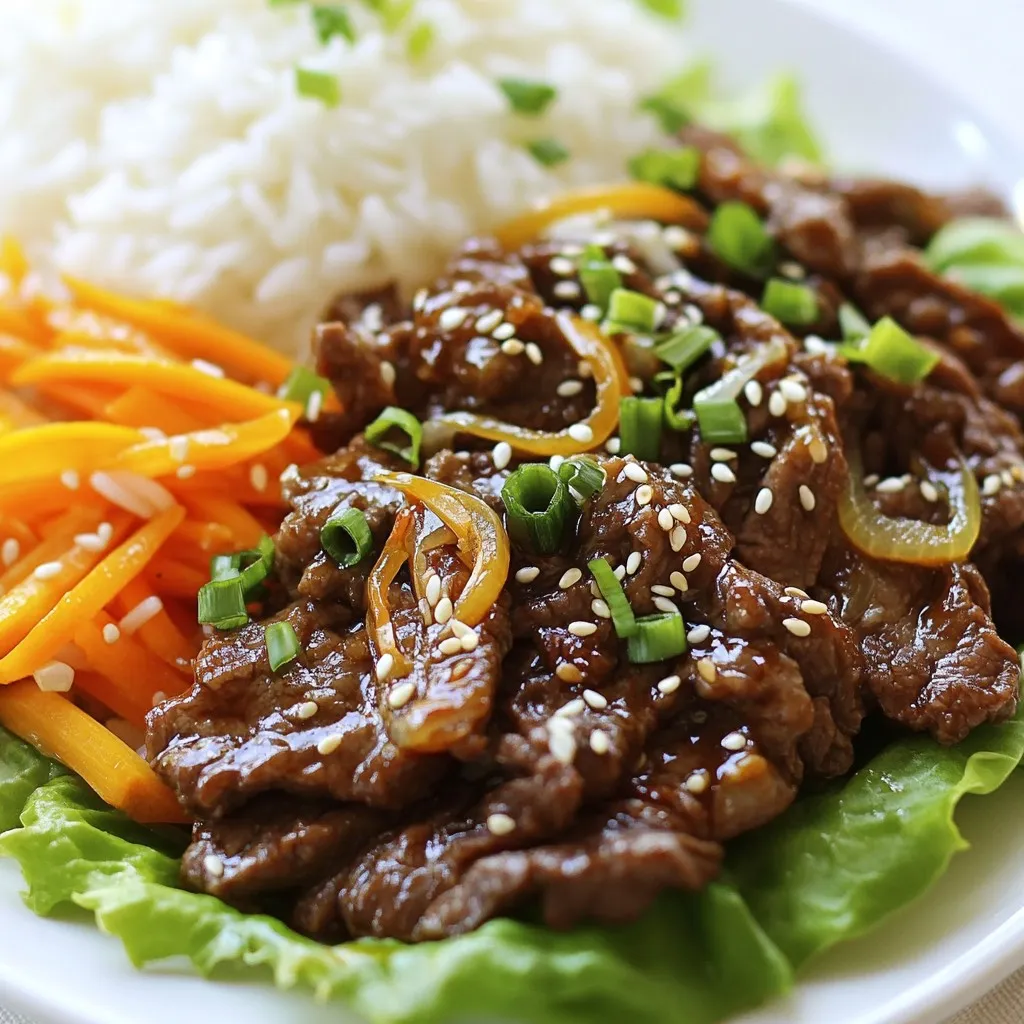
Authentic Korean Beef Bulgogi Flavorful Cooking Guide

WANT TO SAVE THIS RECIPE?

Craving authentic Korean beef bulgogi? You’re in luck! This flavorful cooking guide will walk you through each step to create a dish bursting with taste. From choosing the right beef to mastering the marinade, I’ll share tips that guarantee your bulgogi is a hit. Whether you serve it over rice or in lettuce wraps, your meal will impress everyone at the table. Let’s dive into the savory secrets of bulgogi!

- 1 lb beef sirloin, sliced thinly - 1/4 cup soy sauce - 2 tablespoons brown sugar - 1 tablespoon sesame oil - 2 cloves garlic, minced - 1-inch piece ginger, finely grated - 1/2 onion, sliced thin - 2 green onions, sliced - 1 tablespoon gochugaru (optional) To make a great bulgogi, you need quality beef sirloin. Choose a piece that is fresh and well-marbled. This will help keep your meat tender and juicy. Slice the beef against the grain. This means cutting the meat in the opposite direction of its fibers. You will also need soy sauce. It adds saltiness and depth. Brown sugar gives a sweet touch, balancing the salt. Sesame oil brings a nutty flavor that enhances the dish. Fresh garlic and ginger add zest, while onions give a sweet, mild crunch. Gochugaru is optional, but it adds a nice spicy kick. - Vegetables like carrots and green onions - Fresh lettuce leaves or steamed rice for serving - Flavor amplifiers: sesame seeds, salt, and black pepper You can add vegetables to your bulgogi for more color and taste. Carrots add sweetness, while green onions provide a fresh bite. Lettuce leaves are great for wrapping the beef. They create a nice, crunchy texture. If you prefer, serve bulgogi over steamed rice. This makes for a comforting meal. Don’t forget the finishing touches! Sprinkle sesame seeds for added crunch. Adjust the taste with salt and black pepper as needed. All these ingredients come together to create a delicious, authentic Korean beef bulgogi. {{ingredient_image_2}} To make beef bulgogi, start with the marinade. In a bowl, mix: - 1/4 cup soy sauce - 2 tablespoons brown sugar - 1 tablespoon sesame oil - 2 cloves garlic, minced - 1-inch piece ginger, grated - 1 tablespoon gochugaru (optional) Whisk these ingredients until smooth. This mix gives flavor and depth. Next, add your thinly sliced beef sirloin. Make sure every piece gets coated well. I find it helps to use your hands. Cover the bowl and place it in the fridge. Let it marinate for at least 30 minutes. For a richer taste, let it sit for up to 2 hours. Heat a large skillet or grill pan over medium-high heat. Pour in a splash of sesame oil to keep the beef from sticking. Once your pan is hot, add the marinated beef, sliced onion, and julienned carrot. Stir-fry for 4-5 minutes. You want the beef to turn brown and cook fully. Keep stirring to cook evenly. After that, mix in chopped green onions and sesame seeds. Stir for one more minute. Before serving, taste and adjust the seasoning with salt and black pepper if needed. You can serve bulgogi in two great ways. Wrap it in fresh lettuce leaves. This gives a nice crunch. Or, place it over a bed of steamed rice. Both ways are tasty! For a beautiful presentation, use a big platter. Sprinkle more sesame seeds and green onion on top. You can also arrange lettuce leaves around the dish. This makes for an interactive dining experience. Guests can build their own wraps or enjoy a hearty bowl of rice. - Choosing the right cut of beef: Use beef sirloin. It is tender and flavorful. Thinly slice the beef against the grain. This makes it easier to chew. - Marinating secrets for better flavor: Mix soy sauce, brown sugar, sesame oil, garlic, and ginger. Let the beef soak in this mix. Marinate for at least 30 minutes. For the best taste, try marinating for up to 2 hours. - Tips for achieving a perfect stir-fry: Heat your skillet on medium-high heat. Add sesame oil to keep the beef from sticking. Stir-fry the beef with onions and carrots for 4-5 minutes. Keep stirring to cook evenly. - Recommended cooking tools: A large skillet or grill pan works best. Use non-stick pans if you have them. They help prevent sticking. - Importance of the right heat settings: Start with medium-high heat. This cooks the beef quickly. Too low heat can make the beef tough. - Alternative cooking methods: You can grill or broil the bulgogi. Both methods add a nice char. They also enhance the flavor. Pro Tips Marinating Time: For the best flavor, marinate the beef for at least 2 hours or up to overnight. This allows the flavors to penetrate the meat more deeply. Cut Against the Grain: Always slice the beef against the grain. This ensures the meat is tender and easy to chew. Adjusting Spice Levels: If you're unsure about the spiciness, start with a small amount of gochugaru and taste as you go. You can always add more if needed. Serving Suggestions: For an authentic experience, serve bulgogi with kimchi and other banchan (side dishes) to complement the flavors. {{image_4}} You can swap beef for chicken or tofu. Chicken cooks fast and stays juicy. Tofu adds a nice texture and absorbs flavors well. Try using different veggies for a fresh take. You can add bell peppers, zucchini, or mushrooms. They give color and crunch. Adjust the spice level by adding more or less gochugaru. If you like heat, add more. If you prefer mild, skip it. Korean regions have their own styles of bulgogi. Some areas use different marinades or cooking methods. You can find variations with sweet and savory flavors. Authentic recipes often stay true to tradition, while modern takes mix in new tastes. Common side dishes served with bulgogi include kimchi and rice. They balance the flavors and textures of the dish. Explore these regional differences to expand your bulgogi experience! To store leftover bulgogi, let it cool first. Place the beef in an airtight container. This helps keep the flavors and prevents drying out. You can store it in the fridge for up to three days. Use glass or plastic containers with tight lids for the best results. If you want to save bulgogi for later, freezing works great. Place cooled bulgogi in a freezer-safe bag. Squeeze out all the air to prevent freezer burn. You can freeze it for up to three months. When you’re ready to eat, thaw the bulgogi in the fridge overnight. To reheat, use a skillet over medium heat. Add a splash of water to keep it moist. Stir often to heat evenly. To revitalize flavors, add a dash of soy sauce or sesame oil while reheating. This will boost the taste and make it extra yummy! Bulgogi is a famous Korean dish made from marinated beef. The name "bulgogi" means "fire meat" in Korean. It holds cultural importance in Korea, often served during celebrations. Unlike other Korean dishes, bulgogi stands out for its sweet and savory flavor. It uses a special marinade that makes the beef very tender. Other dishes may not have this same mix of flavors. Yes, you can use chicken, pork, or even tofu as alternatives. Each meat has its own unique taste. If you choose chicken, marinate it for about 30 minutes. For pork, use a similar marinade and cook until it reaches a safe temperature. Cooking times may change depending on the meat type. Chicken cooks faster than beef, so keep an eye on it. Adjust the marinating time to enhance flavors based on the meat you use. To find great bulgogi, seek out local Korean restaurants or markets. Look for places that have a good reputation for authentic dishes. Often, family-owned spots serve the best recipes passed down through generations. When choosing a restaurant, check if they offer traditional side dishes like kimchi or pickled vegetables. These side dishes can hint at the authenticity of the cuisine. You learned about authentic Korean beef bulgogi. We covered key ingredients, marinating tips, and cooking methods. I shared serving ideas, variations, and storage tips to enjoy later. Remember, you can swap beef for chicken or tofu and try new veggies. Authenticity is key, but don’t fear experimenting. Have fun making bulgogi your way. Enjoy each bite and create your own spin on this classic dish.

Why I Love This Recipe

  1. Quick and Easy: This recipe comes together in under 40 minutes, making it perfect for a weeknight dinner.
  2. Flavorful Marinade: The combination of soy sauce, brown sugar, and sesame oil creates a deliciously rich flavor that will impress anyone.
  3. Customizable: You can easily adjust the heat level by adding more or less gochugaru, or even skip it entirely for a milder dish.
  4. Interactive Dining: Serving bulgogi wrapped in fresh lettuce leaves makes for a fun and interactive meal experience!

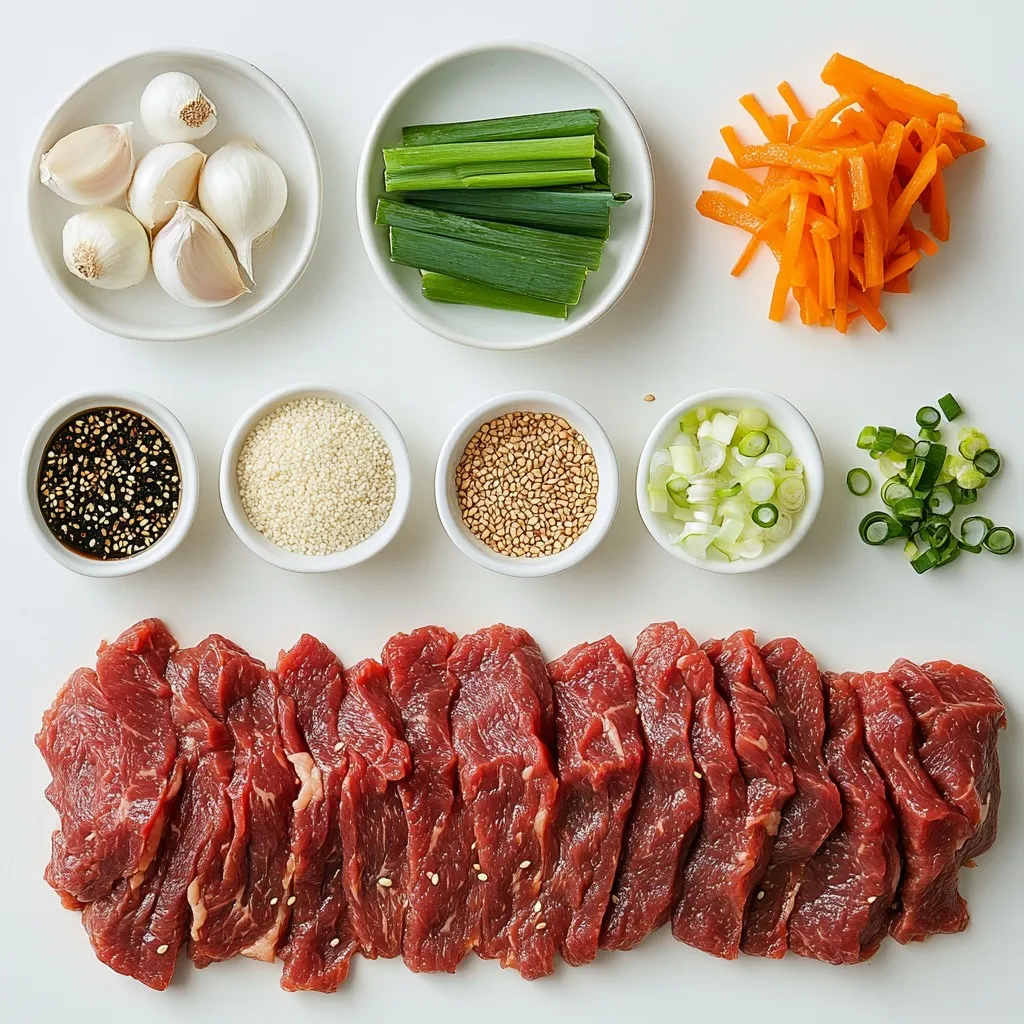
Ingredients

Main Ingredients for Authentic Korean Beef Bulgogi

– 1 lb beef sirloin, sliced thinly

– 1/4 cup soy sauce

– 2 tablespoons brown sugar

– 1 tablespoon sesame oil

– 2 cloves garlic, minced

– 1-inch piece ginger, finely grated

– 1/2 onion, sliced thin

– 2 green onions, sliced

– 1 tablespoon gochugaru (optional)

To make a great bulgogi, you need quality beef sirloin. Choose a piece that is fresh and well-marbled. This will help keep your meat tender and juicy. Slice the beef against the grain. This means cutting the meat in the opposite direction of its fibers.

You will also need soy sauce. It adds saltiness and depth. Brown sugar gives a sweet touch, balancing the salt. Sesame oil brings a nutty flavor that enhances the dish. Fresh garlic and ginger add zest, while onions give a sweet, mild crunch. Gochugaru is optional, but it adds a nice spicy kick.

Optional Add-Ins

– Vegetables like carrots and green onions

– Fresh lettuce leaves or steamed rice for serving

– Flavor amplifiers: sesame seeds, salt, and black pepper

You can add vegetables to your bulgogi for more color and taste. Carrots add sweetness, while green onions provide a fresh bite. Lettuce leaves are great for wrapping the beef. They create a nice, crunchy texture. If you prefer, serve bulgogi over steamed rice. This makes for a comforting meal.

Don’t forget the finishing touches! Sprinkle sesame seeds for added crunch. Adjust the taste with salt and black pepper as needed. All these ingredients come together to create a delicious, authentic Korean beef bulgogi.
Step-by-Step Instructions

Marinating the Beef

To make beef bulgogi, start with the marinade. In a bowl, mix:

– 1/4 cup soy sauce

– 2 tablespoons brown sugar

– 1 tablespoon sesame oil

– 2 cloves garlic, minced

– 1-inch piece ginger, grated

– 1 tablespoon gochugaru (optional)

Whisk these ingredients until smooth. This mix gives flavor and depth. Next, add your thinly sliced beef sirloin. Make sure every piece gets coated well. I find it helps to use your hands. Cover the bowl and place it in the fridge. Let it marinate for at least 30 minutes. For a richer taste, let it sit for up to 2 hours.

Cooking Techniques

Heat a large skillet or grill pan over medium-high heat. Pour in a splash of sesame oil to keep the beef from sticking. Once your pan is hot, add the marinated beef, sliced onion, and julienned carrot. Stir-fry for 4-5 minutes. You want the beef to turn brown and cook fully. Keep stirring to cook evenly.

After that, mix in chopped green onions and sesame seeds. Stir for one more minute. Before serving, taste and adjust the seasoning with salt and black pepper if needed.

Serving Suggestions

You can serve bulgogi in two great ways. Wrap it in fresh lettuce leaves. This gives a nice crunch. Or, place it over a bed of steamed rice. Both ways are tasty!

For a beautiful presentation, use a big platter. Sprinkle more sesame seeds and green onion on top. You can also arrange lettuce leaves around the dish. This makes for an interactive dining experience. Guests can build their own wraps or enjoy a hearty bowl of rice.

Tips & Tricks

Perfecting Your Bulgogi

Choosing the right cut of beef: Use beef sirloin. It is tender and flavorful. Thinly slice the beef against the grain. This makes it easier to chew.

Marinating secrets for better flavor: Mix soy sauce, brown sugar, sesame oil, garlic, and ginger. Let the beef soak in this mix. Marinate for at least 30 minutes. For the best taste, try marinating for up to 2 hours.

Tips for achieving a perfect stir-fry: Heat your skillet on medium-high heat. Add sesame oil to keep the beef from sticking. Stir-fry the beef with onions and carrots for 4-5 minutes. Keep stirring to cook evenly.

Cooking Equipment

Recommended cooking tools: A large skillet or grill pan works best. Use non-stick pans if you have them. They help prevent sticking.

Importance of the right heat settings: Start with medium-high heat. This cooks the beef quickly. Too low heat can make the beef tough.

Alternative cooking methods: You can grill or broil the bulgogi. Both methods add a nice char. They also enhance the flavor.

Pro Tips

  1. Marinating Time: For the best flavor, marinate the beef for at least 2 hours or up to overnight. This allows the flavors to penetrate the meat more deeply.
  2. Cut Against the Grain: Always slice the beef against the grain. This ensures the meat is tender and easy to chew.
  3. Adjusting Spice Levels: If you’re unsure about the spiciness, start with a small amount of gochugaru and taste as you go. You can always add more if needed.
  4. Serving Suggestions: For an authentic experience, serve bulgogi with kimchi and other banchan (side dishes) to complement the flavors.

Variations

Beef Bulgogi with a Twist

You can swap beef for chicken or tofu. Chicken cooks fast and stays juicy. Tofu adds a nice texture and absorbs flavors well. Try using different veggies for a fresh take. You can add bell peppers, zucchini, or mushrooms. They give color and crunch. Adjust the spice level by adding more or less gochugaru. If you like heat, add more. If you prefer mild, skip it.

Regional Variations of Bulgogi

Korean regions have their own styles of bulgogi. Some areas use different marinades or cooking methods. You can find variations with sweet and savory flavors. Authentic recipes often stay true to tradition, while modern takes mix in new tastes. Common side dishes served with bulgogi include kimchi and rice. They balance the flavors and textures of the dish. Explore these regional differences to expand your bulgogi experience!

Storage Info

Refrigeration Guidelines

To store leftover bulgogi, let it cool first. Place the beef in an airtight container. This helps keep the flavors and prevents drying out. You can store it in the fridge for up to three days. Use glass or plastic containers with tight lids for the best results.

Freezing and Reheating Tips

If you want to save bulgogi for later, freezing works great. Place cooled bulgogi in a freezer-safe bag. Squeeze out all the air to prevent freezer burn. You can freeze it for up to three months.

When you’re ready to eat, thaw the bulgogi in the fridge overnight. To reheat, use a skillet over medium heat. Add a splash of water to keep it moist. Stir often to heat evenly. To revitalize flavors, add a dash of soy sauce or sesame oil while reheating. This will boost the taste and make it extra yummy!

FAQs

What is Bulgogi?

Bulgogi is a famous Korean dish made from marinated beef. The name “bulgogi” means “fire meat” in Korean. It holds cultural importance in Korea, often served during celebrations. Unlike other Korean dishes, bulgogi stands out for its sweet and savory flavor. It uses a special marinade that makes the beef very tender. Other dishes may not have this same mix of flavors.

Can I use a different type of meat for Bulgogi?

Yes, you can use chicken, pork, or even tofu as alternatives. Each meat has its own unique taste. If you choose chicken, marinate it for about 30 minutes. For pork, use a similar marinade and cook until it reaches a safe temperature. Cooking times may change depending on the meat type. Chicken cooks faster than beef, so keep an eye on it. Adjust the marinating time to enhance flavors based on the meat you use.

Where can I find the best Authentic Korean Beef Bulgogi?

To find great bulgogi, seek out local Korean restaurants or markets. Look for places that have a good reputation for authentic dishes. Often, family-owned spots serve the best recipes passed down through generations. When choosing a restaurant, check if they offer traditional side dishes like kimchi or pickled vegetables. These side dishes can hint at the authenticity of the cuisine.

You learned about authentic Korean beef bulgogi. We covered key ingredients, marinating tips, and cooking methods. I shared serving ideas, variations, and storage tips to enjoy later. Remember, you can swap beef for chicken or tofu and try new veggies. Authenticity is key, but don’t fear experimenting. Have fun making bulgogi your way. Enjoy each bite and create your own spin on this classic dis

- 1 lb beef sirloin, sliced thinly - 1/4 cup soy sauce - 2 tablespoons brown sugar - 1 tablespoon sesame oil - 2 cloves garlic, minced - 1-inch piece ginger, finely grated - 1/2 onion, sliced thin - 2 green onions, sliced - 1 tablespoon gochugaru (optional) To make a great bulgogi, you need quality beef sirloin. Choose a piece that is fresh and well-marbled. This will help keep your meat tender and juicy. Slice the beef against the grain. This means cutting the meat in the opposite direction of its fibers. You will also need soy sauce. It adds saltiness and depth. Brown sugar gives a sweet touch, balancing the salt. Sesame oil brings a nutty flavor that enhances the dish. Fresh garlic and ginger add zest, while onions give a sweet, mild crunch. Gochugaru is optional, but it adds a nice spicy kick. - Vegetables like carrots and green onions - Fresh lettuce leaves or steamed rice for serving - Flavor amplifiers: sesame seeds, salt, and black pepper You can add vegetables to your bulgogi for more color and taste. Carrots add sweetness, while green onions provide a fresh bite. Lettuce leaves are great for wrapping the beef. They create a nice, crunchy texture. If you prefer, serve bulgogi over steamed rice. This makes for a comforting meal. Don’t forget the finishing touches! Sprinkle sesame seeds for added crunch. Adjust the taste with salt and black pepper as needed. All these ingredients come together to create a delicious, authentic Korean beef bulgogi. {{ingredient_image_2}} To make beef bulgogi, start with the marinade. In a bowl, mix: - 1/4 cup soy sauce - 2 tablespoons brown sugar - 1 tablespoon sesame oil - 2 cloves garlic, minced - 1-inch piece ginger, grated - 1 tablespoon gochugaru (optional) Whisk these ingredients until smooth. This mix gives flavor and depth. Next, add your thinly sliced beef sirloin. Make sure every piece gets coated well. I find it helps to use your hands. Cover the bowl and place it in the fridge. Let it marinate for at least 30 minutes. For a richer taste, let it sit for up to 2 hours. Heat a large skillet or grill pan over medium-high heat. Pour in a splash of sesame oil to keep the beef from sticking. Once your pan is hot, add the marinated beef, sliced onion, and julienned carrot. Stir-fry for 4-5 minutes. You want the beef to turn brown and cook fully. Keep stirring to cook evenly. After that, mix in chopped green onions and sesame seeds. Stir for one more minute. Before serving, taste and adjust the seasoning with salt and black pepper if needed. You can serve bulgogi in two great ways. Wrap it in fresh lettuce leaves. This gives a nice crunch. Or, place it over a bed of steamed rice. Both ways are tasty! For a beautiful presentation, use a big platter. Sprinkle more sesame seeds and green onion on top. You can also arrange lettuce leaves around the dish. This makes for an interactive dining experience. Guests can build their own wraps or enjoy a hearty bowl of rice. - Choosing the right cut of beef: Use beef sirloin. It is tender and flavorful. Thinly slice the beef against the grain. This makes it easier to chew. - Marinating secrets for better flavor: Mix soy sauce, brown sugar, sesame oil, garlic, and ginger. Let the beef soak in this mix. Marinate for at least 30 minutes. For the best taste, try marinating for up to 2 hours. - Tips for achieving a perfect stir-fry: Heat your skillet on medium-high heat. Add sesame oil to keep the beef from sticking. Stir-fry the beef with onions and carrots for 4-5 minutes. Keep stirring to cook evenly. - Recommended cooking tools: A large skillet or grill pan works best. Use non-stick pans if you have them. They help prevent sticking. - Importance of the right heat settings: Start with medium-high heat. This cooks the beef quickly. Too low heat can make the beef tough. - Alternative cooking methods: You can grill or broil the bulgogi. Both methods add a nice char. They also enhance the flavor. Pro Tips Marinating Time: For the best flavor, marinate the beef for at least 2 hours or up to overnight. This allows the flavors to penetrate the meat more deeply. Cut Against the Grain: Always slice the beef against the grain. This ensures the meat is tender and easy to chew. Adjusting Spice Levels: If you're unsure about the spiciness, start with a small amount of gochugaru and taste as you go. You can always add more if needed. Serving Suggestions: For an authentic experience, serve bulgogi with kimchi and other banchan (side dishes) to complement the flavors. {{image_4}} You can swap beef for chicken or tofu. Chicken cooks fast and stays juicy. Tofu adds a nice texture and absorbs flavors well. Try using different veggies for a fresh take. You can add bell peppers, zucchini, or mushrooms. They give color and crunch. Adjust the spice level by adding more or less gochugaru. If you like heat, add more. If you prefer mild, skip it. Korean regions have their own styles of bulgogi. Some areas use different marinades or cooking methods. You can find variations with sweet and savory flavors. Authentic recipes often stay true to tradition, while modern takes mix in new tastes. Common side dishes served with bulgogi include kimchi and rice. They balance the flavors and textures of the dish. Explore these regional differences to expand your bulgogi experience! To store leftover bulgogi, let it cool first. Place the beef in an airtight container. This helps keep the flavors and prevents drying out. You can store it in the fridge for up to three days. Use glass or plastic containers with tight lids for the best results. If you want to save bulgogi for later, freezing works great. Place cooled bulgogi in a freezer-safe bag. Squeeze out all the air to prevent freezer burn. You can freeze it for up to three months. When you’re ready to eat, thaw the bulgogi in the fridge overnight. To reheat, use a skillet over medium heat. Add a splash of water to keep it moist. Stir often to heat evenly. To revitalize flavors, add a dash of soy sauce or sesame oil while reheating. This will boost the taste and make it extra yummy! Bulgogi is a famous Korean dish made from marinated beef. The name "bulgogi" means "fire meat" in Korean. It holds cultural importance in Korea, often served during celebrations. Unlike other Korean dishes, bulgogi stands out for its sweet and savory flavor. It uses a special marinade that makes the beef very tender. Other dishes may not have this same mix of flavors. Yes, you can use chicken, pork, or even tofu as alternatives. Each meat has its own unique taste. If you choose chicken, marinate it for about 30 minutes. For pork, use a similar marinade and cook until it reaches a safe temperature. Cooking times may change depending on the meat type. Chicken cooks faster than beef, so keep an eye on it. Adjust the marinating time to enhance flavors based on the meat you use. To find great bulgogi, seek out local Korean restaurants or markets. Look for places that have a good reputation for authentic dishes. Often, family-owned spots serve the best recipes passed down through generations. When choosing a restaurant, check if they offer traditional side dishes like kimchi or pickled vegetables. These side dishes can hint at the authenticity of the cuisine. You learned about authentic Korean beef bulgogi. We covered key ingredients, marinating tips, and cooking methods. I shared serving ideas, variations, and storage tips to enjoy later. Remember, you can swap beef for chicken or tofu and try new veggies. Authenticity is key, but don’t fear experimenting. Have fun making bulgogi your way. Enjoy each bite and create your own spin on this classic dish.

Sizzling Korean Beef Bulgogi

A delicious and savory Korean dish made with marinated beef, stir-fried to perfection.
Prep Time 10 minutes
Cook Time 30 minutes
Total Time 40 minutes
Course Main Course
Cuisine Korean
Servings 4
Calories 300 kcal

Ingredients
  

  • 1 lb beef sirloin, sliced thinly against the grain
  • 1/4 cup soy sauce
  • 2 tablespoons brown sugar
  • 1 tablespoon sesame oil
  • 2 cloves garlic, minced
  • 1 inch piece ginger, finely grated
  • 1/2 onion sliced thin
  • 2 green onions sliced
  • 1 tablespoon gochugaru (Korean red chili flakes) (optional)
  • 1 medium carrot, julienned
  • 1 tablespoon sesame seeds
  • to taste salt and black pepper
  • for serving fresh lettuce leaves or steamed rice

Instructions
 

  • In a medium mixing bowl, whisk together the soy sauce, brown sugar, sesame oil, minced garlic, grated ginger, and gochugaru (if you desire heat). Ensure the mixture is well combined to form a smooth marinade.
  • Place the thinly sliced beef into the marinade, making sure each piece is thoroughly coated. Cover the bowl and let it marinate in the refrigerator for at least 30 minutes, or prolong the marinating time for up to 2 hours for enhanced flavor development.
  • Heat a large skillet or grill pan over medium-high heat. Add a splash of sesame oil to the pan to prevent sticking and enhance the flavor.
  • Once the pan is hot, add the marinated beef along with the sliced onion and julienned carrot. Stir-fry for approximately 4-5 minutes, or until the beef is nicely browned and fully cooked through, stirring frequently to ensure even cooking.
  • Incorporate the chopped green onions and sesame seeds into the skillet, stirring for an additional minute to meld all the flavors. Taste and adjust seasoning with salt and black pepper as necessary.
  • Remove the skillet from heat and serve the sizzling beef bulgogi immediately, either wrapped in fresh lettuce leaves for a refreshing bite or over a bed of perfectly steamed rice.

Notes

Serve with fresh lettuce leaves or steamed rice for a delightful meal.
Keyword beef, bulgogi, Korean cuisine, stir-fry

WANT TO SAVE THIS RECIPE?