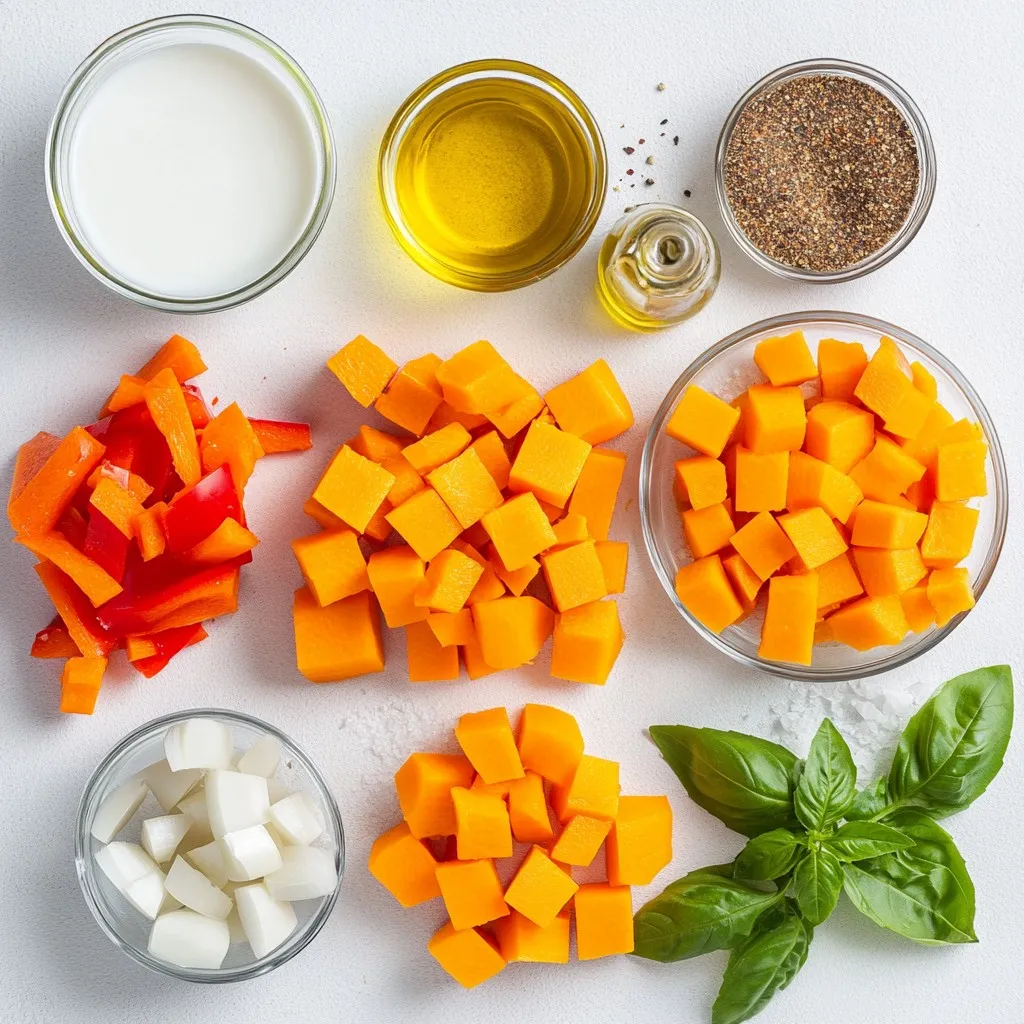
Silky Roasted Vegetable Soup Comforting and Simple Recipe

WANT TO SAVE THIS RECIPE?

Are you craving a warm, comforting soup that’s easy to make? Look no further! My Silky Roasted Vegetable Soup combines sweet butternut squash, vibrant bell peppers, and creamy coconut milk for a rich flavor. In this post, I’ll guide you through simple steps and tips to create this cozy dish. Get ready to impress your taste buds with a healthy, hearty meal that soothes the soul!

- 2 cups butternut squash, peeled and cut into 1-inch cubes - 1 cup carrots, peeled and diced into small pieces - 1 red bell pepper, diced - 1 large onion, chopped into chunks - 4 cloves garlic, finely minced - 4 cups vegetable broth (homemade or store-bought) - 1 cup creamy coconut milk (canned for best texture) These ingredients create the base for a rich and tasty soup. The butternut squash adds natural sweetness. Carrots also bring a lovely flavor and color. Red bell pepper gives a pop of freshness. Onion and garlic add depth, while vegetable broth makes it hearty. Coconut milk makes it creamy and comforting. - Fresh basil, torn or whole, for garnish - 2 tablespoons extra virgin olive oil - 1 teaspoon ground cumin - 1 teaspoon smoked paprika - Salt and freshly ground black pepper to taste Adding fresh basil brightens the soup. Olive oil enhances flavor and richness. Ground cumin gives a warm note, while smoked paprika adds a hint of smokiness. Adjust salt and pepper to your taste for the perfect balance. - Mixing bowl - Baking sheet - Immersion blender or traditional blender - Large pot You will need a mixing bowl to toss the veggies. A baking sheet helps roast them evenly. An immersion blender makes it easy to achieve a silky texture. If you use a traditional blender, blend in small batches. A large pot is essential for combining everything into a comforting soup. {{ingredient_image_2}} 1. Preheat your oven to 400°F (200°C). This heat helps to caramelize the veggies. 2. In a large mixing bowl, add 2 cups of butternut squash, 1 cup of diced carrots, 1 diced red bell pepper, and 1 large chopped onion. 3. Now, add 4 minced garlic cloves, 2 tablespoons of extra virgin olive oil, 1 teaspoon of ground cumin, and 1 teaspoon of smoked paprika. 4. Sprinkle in salt and freshly ground black pepper. Toss until the veggies are well coated. 1. Spread the seasoned vegetables evenly on a baking sheet lined with parchment paper. 2. Roast them for 25-30 minutes. Stir halfway through to ensure even cooking. 3. Check for caramelization. The veggies should be tender and have a nice golden color. 1. Once roasted, carefully transfer the veggies to a large pot. 2. Pour in 4 cups of vegetable broth. Bring this to a gentle boil over medium-high heat. 3. After boiling, lower the heat and let it simmer for about 10 minutes. This helps the flavors meld together. 4. Blend the soup until smooth. Use an immersion blender directly in the pot or blend in batches in a traditional blender. 5. Stir in 1 cup of creamy coconut milk. Taste and adjust seasoning with salt and pepper if needed. 6. Warm the soup through over low heat for a few minutes. 7. Serve in bowls and top with fresh basil leaves for a lovely touch. Roasting brings out the best in vegetables. I always preheat my oven to 400°F. This high heat helps caramelize the veggies. Caramelization adds depth and sweetness. Spread the vegetables out on the baking sheet. This ensures they cook evenly. If they overlap, they may steam instead of roast. For a silky texture, blending is key. I prefer using an immersion blender. It keeps everything in one pot, making cleanup easy. If you use a regular blender, do it in batches. Leave space at the top for steam. Blend until the soup is smooth and creamy. Fresh herbs make a big difference. I love adding basil for brightness. You can also use other herbs like thyme or cilantro. Spices can change the flavor profile too. Ground cumin and smoked paprika add warmth. Try adding a splash of lemon juice for zest. Experiment with unusual add-ins like ginger for a twist. Pro Tips Choose Fresh Vegetables: For the best flavor and texture, use fresh, seasonal vegetables. Look for vibrant colors and firm textures when selecting your produce. Don’t Rush the Roasting: Allow the vegetables to fully caramelize during roasting. This step enhances the natural sweetness and adds depth to your soup. Adjust Consistency: If you prefer a thicker soup, reduce the amount of broth added after blending. For a thinner consistency, simply add more broth or coconut milk until desired. Flavor Enhancements: Experiment with additional spices such as nutmeg or ginger for a unique twist. A splash of lime or lemon juice just before serving can brighten the flavors too! {{image_4}} You can easily adapt this soup to fit different diets. To make it vegan, just check your broth. Some brands have animal products. Use coconut milk for creaminess. For gluten-free options, ensure the broth is gluten-free. If you want a low-fat version, swap the coconut milk with unsweetened almond milk. This keeps the taste light but still creamy. Feel free to mix up the vegetables. Sweet potatoes are a great swap for butternut squash. Zucchini can add a nice texture too. Try adding leeks or parsnips for unique flavors. Cauliflower works well and adds creaminess when blended. Broccoli can also give a nice green touch. You can enhance the flavor in many ways. Add a pinch of cayenne for heat. A dash of nutmeg can bring warmth to the soup. If you like herbs, try thyme or rosemary. For a cream substitute, use cashew cream instead of coconut milk. This adds a rich flavor and keeps it rich. You can also toss in some lemon juice for brightness. To store your leftover silky roasted vegetable soup, let it cool first. Then, pour it into an airtight container. Seal it tightly and place it in the fridge. This keeps your soup fresh for later. Make sure to eat it within three to five days for the best taste. If you want to save your soup for a longer time, freezing is a great option. Use a freezer-safe container or heavy-duty freezer bags. Leave some space at the top to allow for expansion. Label the container with the date. When you want to eat it, thaw it overnight in the fridge. Reheat it on the stove over low heat. Stir well to get a creamy texture again. In the fridge, your silky roasted vegetable soup lasts about three to five days. In the freezer, it can stay good for up to three months. Just remember to check for any signs of freezer burn. If you see any, it’s better to toss it out. Enjoy your soup while it’s fresh for the best flavor! Yes, you can use fresh vegetables. However, roasting adds flavor. Roasting caramelizes the sugars and enhances taste. If you skip roasting, boil or steam the veggies instead. This keeps some flavor but lacks the depth of roasted ones. To change the soup's thickness, you have a few options. If you want it thicker, add less broth. You can also blend in more roasted vegetables. If it is too thick, stir in more vegetable broth or coconut milk. Adjust until you find your perfect texture. Yes, you can make this soup ahead of time. It tastes even better the next day, as flavors meld. Store it in the fridge for up to three days. Just reheat it on the stove before serving. You can also freeze it for up to three months. Silky Roasted Vegetable Soup pairs well with many sides. I love to serve it with crusty bread. A fresh salad or grilled cheese also complements it nicely. You can add toppings like croutons, fresh herbs, or a drizzle of olive oil for extra flavor. In this article, we explored the essential ingredients and step-by-step instructions for creating a delicious Silky Roasted Vegetable Soup. We discussed roasting techniques and tips for achieving a creamy texture. You can adjust flavors and make dietary substitutions easily. Remember, proper storage ensures this soup stays fresh for days. Enjoy experimenting with variations and serving it with your favorite sides. This recipe is not only tasty but also flexible, making it a great addition to your kitchen. With these tools and steps, you can create a comforting meal any time.

Why I Love This Recipe

  1. Rich Flavor Profile: This soup combines the natural sweetness of roasted vegetables with the creamy richness of coconut milk, creating a comforting and delicious flavor experience.
  2. Simple Preparation: With minimal chopping and just one pot required for cooking, this recipe is easy to prepare, making it perfect for busy weeknights.
  3. Healthy Ingredients: Packed with nutritious vegetables and wholesome coconut milk, this soup is not only tasty but also nourishing and satisfying.
  4. Versatile Serving Options: Enjoy it as a stand-alone meal, or pair it with crusty bread or a fresh salad for a complete dining experience.

Ingredients

List of Main Ingredients

– 2 cups butternut squash, peeled and cut into 1-inch cubes

– 1 cup carrots, peeled and diced into small pieces

– 1 red bell pepper, diced

– 1 large onion, chopped into chunks

– 4 cloves garlic, finely minced

– 4 cups vegetable broth (homemade or store-bought)

– 1 cup creamy coconut milk (canned for best texture)

These ingredients create the base for a rich and tasty soup. The butternut squash adds natural sweetness. Carrots also bring a lovely flavor and color. Red bell pepper gives a pop of freshness. Onion and garlic add depth, while vegetable broth makes it hearty. Coconut milk makes it creamy and comforting.

Optional Garnishes and Seasonings

– Fresh basil, torn or whole, for garnish

– 2 tablespoons extra virgin olive oil

– 1 teaspoon ground cumin

– 1 teaspoon smoked paprika

– Salt and freshly ground black pepper to taste

Adding fresh basil brightens the soup. Olive oil enhances flavor and richness. Ground cumin gives a warm note, while smoked paprika adds a hint of smokiness. Adjust salt and pepper to your taste for the perfect balance.

Recommended Equipment

– Mixing bowl

– Baking sheet

– Immersion blender or traditional blender

– Large pot

You will need a mixing bowl to toss the veggies. A baking sheet helps roast them evenly. An immersion blender makes it easy to achieve a silky texture. If you use a traditional blender, blend in small batches. A large pot is essential for combining everything into a comforting soup.

Step-by-Step Instructions

Preparation

1. Preheat your oven to 400°F (200°C). This heat helps to caramelize the veggies.

2. In a large mixing bowl, add 2 cups of butternut squash, 1 cup of diced carrots, 1 diced red bell pepper, and 1 large chopped onion.

3. Now, add 4 minced garlic cloves, 2 tablespoons of extra virgin olive oil, 1 teaspoon of ground cumin, and 1 teaspoon of smoked paprika.

4. Sprinkle in salt and freshly ground black pepper. Toss until the veggies are well coated.

Roasting Process

1. Spread the seasoned vegetables evenly on a baking sheet lined with parchment paper.

2. Roast them for 25-30 minutes. Stir halfway through to ensure even cooking.

3. Check for caramelization. The veggies should be tender and have a nice golden color.

Making the Soup

1. Once roasted, carefully transfer the veggies to a large pot.

2. Pour in 4 cups of vegetable broth. Bring this to a gentle boil over medium-high heat.

3. After boiling, lower the heat and let it simmer for about 10 minutes. This helps the flavors meld together.

4. Blend the soup until smooth. Use an immersion blender directly in the pot or blend in batches in a traditional blender.

5. Stir in 1 cup of creamy coconut milk. Taste and adjust seasoning with salt and pepper if needed.

6. Warm the soup through over low heat for a few minutes.

7. Serve in bowls and top with fresh basil leaves for a lovely touch.

Tips & Tricks

Best Roasting Techniques

Roasting brings out the best in vegetables. I always preheat my oven to 400°F. This high heat helps caramelize the veggies. Caramelization adds depth and sweetness. Spread the vegetables out on the baking sheet. This ensures they cook evenly. If they overlap, they may steam instead of roast.

Achieving Creaminess

For a silky texture, blending is key. I prefer using an immersion blender. It keeps everything in one pot, making cleanup easy. If you use a regular blender, do it in batches. Leave space at the top for steam. Blend until the soup is smooth and creamy.

Flavor Enhancements

Fresh herbs make a big difference. I love adding basil for brightness. You can also use other herbs like thyme or cilantro. Spices can change the flavor profile too. Ground cumin and smoked paprika add warmth. Try adding a splash of lemon juice for zest. Experiment with unusual add-ins like ginger for a twist.

Pro Tips

  1. Choose Fresh Vegetables: For the best flavor and texture, use fresh, seasonal vegetables. Look for vibrant colors and firm textures when selecting your produce.
  2. Don’t Rush the Roasting: Allow the vegetables to fully caramelize during roasting. This step enhances the natural sweetness and adds depth to your soup.
  3. Adjust Consistency: If you prefer a thicker soup, reduce the amount of broth added after blending. For a thinner consistency, simply add more broth or coconut milk until desired.
  4. Flavor Enhancements: Experiment with additional spices such as nutmeg or ginger for a unique twist. A splash of lime or lemon juice just before serving can brighten the flavors too!

Variations

Dietary Substitutions

You can easily adapt this soup to fit different diets. To make it vegan, just check your broth. Some brands have animal products. Use coconut milk for creaminess. For gluten-free options, ensure the broth is gluten-free. If you want a low-fat version, swap the coconut milk with unsweetened almond milk. This keeps the taste light but still creamy.

Different Vegetable Combinations

Feel free to mix up the vegetables. Sweet potatoes are a great swap for butternut squash. Zucchini can add a nice texture too. Try adding leeks or parsnips for unique flavors. Cauliflower works well and adds creaminess when blended. Broccoli can also give a nice green touch.

Custom Flavor Profiles

You can enhance the flavor in many ways. Add a pinch of cayenne for heat. A dash of nutmeg can bring warmth to the soup. If you like herbs, try thyme or rosemary. For a cream substitute, use cashew cream instead of coconut milk. This adds a rich flavor and keeps it rich. You can also toss in some lemon juice for brightness.

Storage Info

How to Store Leftovers

To store your leftover silky roasted vegetable soup, let it cool first. Then, pour it into an airtight container. Seal it tightly and place it in the fridge. This keeps your soup fresh for later. Make sure to eat it within three to five days for the best taste.

Freezing Instructions

If you want to save your soup for a longer time, freezing is a great option. Use a freezer-safe container or heavy-duty freezer bags. Leave some space at the top to allow for expansion. Label the container with the date. When you want to eat it, thaw it overnight in the fridge. Reheat it on the stove over low heat. Stir well to get a creamy texture again.

Shelf Life

In the fridge, your silky roasted vegetable soup lasts about three to five days. In the freezer, it can stay good for up to three months. Just remember to check for any signs of freezer burn. If you see any, it’s better to toss it out. Enjoy your soup while it’s fresh for the best flavor!

FAQs

Can I use fresh vegetables instead of roasting?

Yes, you can use fresh vegetables. However, roasting adds flavor. Roasting caramelizes the sugars and enhances taste. If you skip roasting, boil or steam the veggies instead. This keeps some flavor but lacks the depth of roasted ones.

How can I adjust the soup’s thickness?

To change the soup’s thickness, you have a few options. If you want it thicker, add less broth. You can also blend in more roasted vegetables. If it is too thick, stir in more vegetable broth or coconut milk. Adjust until you find your perfect texture.

Can I make this recipe in advance?

Yes, you can make this soup ahead of time. It tastes even better the next day, as flavors meld. Store it in the fridge for up to three days. Just reheat it on the stove before serving. You can also freeze it for up to three months.

What can I serve with Silky Roasted Vegetable Soup?

Silky Roasted Vegetable Soup pairs well with many sides. I love to serve it with crusty bread. A fresh salad or grilled cheese also complements it nicely. You can add toppings like croutons, fresh herbs, or a drizzle of olive oil for extra flavor.

In this article, we explored the essential ingredients and step-by-step instructions for creating a delicious Silky Roasted Vegetable Soup. We discussed roasting techniques and tips for achieving a creamy texture. You can adjust flavors and make dietary substitutions easily. Remember, proper storage ensures this soup stays fresh for days. Enjoy experimenting with variations and serving it with your favorite sides. This recipe is not only tasty but also flexible, making it a great addition to your kitchen. With these tools and steps, you can create a comforting meal any tim

- 2 cups butternut squash, peeled and cut into 1-inch cubes - 1 cup carrots, peeled and diced into small pieces - 1 red bell pepper, diced - 1 large onion, chopped into chunks - 4 cloves garlic, finely minced - 4 cups vegetable broth (homemade or store-bought) - 1 cup creamy coconut milk (canned for best texture) These ingredients create the base for a rich and tasty soup. The butternut squash adds natural sweetness. Carrots also bring a lovely flavor and color. Red bell pepper gives a pop of freshness. Onion and garlic add depth, while vegetable broth makes it hearty. Coconut milk makes it creamy and comforting. - Fresh basil, torn or whole, for garnish - 2 tablespoons extra virgin olive oil - 1 teaspoon ground cumin - 1 teaspoon smoked paprika - Salt and freshly ground black pepper to taste Adding fresh basil brightens the soup. Olive oil enhances flavor and richness. Ground cumin gives a warm note, while smoked paprika adds a hint of smokiness. Adjust salt and pepper to your taste for the perfect balance. - Mixing bowl - Baking sheet - Immersion blender or traditional blender - Large pot You will need a mixing bowl to toss the veggies. A baking sheet helps roast them evenly. An immersion blender makes it easy to achieve a silky texture. If you use a traditional blender, blend in small batches. A large pot is essential for combining everything into a comforting soup. {{ingredient_image_2}} 1. Preheat your oven to 400°F (200°C). This heat helps to caramelize the veggies. 2. In a large mixing bowl, add 2 cups of butternut squash, 1 cup of diced carrots, 1 diced red bell pepper, and 1 large chopped onion. 3. Now, add 4 minced garlic cloves, 2 tablespoons of extra virgin olive oil, 1 teaspoon of ground cumin, and 1 teaspoon of smoked paprika. 4. Sprinkle in salt and freshly ground black pepper. Toss until the veggies are well coated. 1. Spread the seasoned vegetables evenly on a baking sheet lined with parchment paper. 2. Roast them for 25-30 minutes. Stir halfway through to ensure even cooking. 3. Check for caramelization. The veggies should be tender and have a nice golden color. 1. Once roasted, carefully transfer the veggies to a large pot. 2. Pour in 4 cups of vegetable broth. Bring this to a gentle boil over medium-high heat. 3. After boiling, lower the heat and let it simmer for about 10 minutes. This helps the flavors meld together. 4. Blend the soup until smooth. Use an immersion blender directly in the pot or blend in batches in a traditional blender. 5. Stir in 1 cup of creamy coconut milk. Taste and adjust seasoning with salt and pepper if needed. 6. Warm the soup through over low heat for a few minutes. 7. Serve in bowls and top with fresh basil leaves for a lovely touch. Roasting brings out the best in vegetables. I always preheat my oven to 400°F. This high heat helps caramelize the veggies. Caramelization adds depth and sweetness. Spread the vegetables out on the baking sheet. This ensures they cook evenly. If they overlap, they may steam instead of roast. For a silky texture, blending is key. I prefer using an immersion blender. It keeps everything in one pot, making cleanup easy. If you use a regular blender, do it in batches. Leave space at the top for steam. Blend until the soup is smooth and creamy. Fresh herbs make a big difference. I love adding basil for brightness. You can also use other herbs like thyme or cilantro. Spices can change the flavor profile too. Ground cumin and smoked paprika add warmth. Try adding a splash of lemon juice for zest. Experiment with unusual add-ins like ginger for a twist. Pro Tips Choose Fresh Vegetables: For the best flavor and texture, use fresh, seasonal vegetables. Look for vibrant colors and firm textures when selecting your produce. Don’t Rush the Roasting: Allow the vegetables to fully caramelize during roasting. This step enhances the natural sweetness and adds depth to your soup. Adjust Consistency: If you prefer a thicker soup, reduce the amount of broth added after blending. For a thinner consistency, simply add more broth or coconut milk until desired. Flavor Enhancements: Experiment with additional spices such as nutmeg or ginger for a unique twist. A splash of lime or lemon juice just before serving can brighten the flavors too! {{image_4}} You can easily adapt this soup to fit different diets. To make it vegan, just check your broth. Some brands have animal products. Use coconut milk for creaminess. For gluten-free options, ensure the broth is gluten-free. If you want a low-fat version, swap the coconut milk with unsweetened almond milk. This keeps the taste light but still creamy. Feel free to mix up the vegetables. Sweet potatoes are a great swap for butternut squash. Zucchini can add a nice texture too. Try adding leeks or parsnips for unique flavors. Cauliflower works well and adds creaminess when blended. Broccoli can also give a nice green touch. You can enhance the flavor in many ways. Add a pinch of cayenne for heat. A dash of nutmeg can bring warmth to the soup. If you like herbs, try thyme or rosemary. For a cream substitute, use cashew cream instead of coconut milk. This adds a rich flavor and keeps it rich. You can also toss in some lemon juice for brightness. To store your leftover silky roasted vegetable soup, let it cool first. Then, pour it into an airtight container. Seal it tightly and place it in the fridge. This keeps your soup fresh for later. Make sure to eat it within three to five days for the best taste. If you want to save your soup for a longer time, freezing is a great option. Use a freezer-safe container or heavy-duty freezer bags. Leave some space at the top to allow for expansion. Label the container with the date. When you want to eat it, thaw it overnight in the fridge. Reheat it on the stove over low heat. Stir well to get a creamy texture again. In the fridge, your silky roasted vegetable soup lasts about three to five days. In the freezer, it can stay good for up to three months. Just remember to check for any signs of freezer burn. If you see any, it’s better to toss it out. Enjoy your soup while it’s fresh for the best flavor! Yes, you can use fresh vegetables. However, roasting adds flavor. Roasting caramelizes the sugars and enhances taste. If you skip roasting, boil or steam the veggies instead. This keeps some flavor but lacks the depth of roasted ones. To change the soup's thickness, you have a few options. If you want it thicker, add less broth. You can also blend in more roasted vegetables. If it is too thick, stir in more vegetable broth or coconut milk. Adjust until you find your perfect texture. Yes, you can make this soup ahead of time. It tastes even better the next day, as flavors meld. Store it in the fridge for up to three days. Just reheat it on the stove before serving. You can also freeze it for up to three months. Silky Roasted Vegetable Soup pairs well with many sides. I love to serve it with crusty bread. A fresh salad or grilled cheese also complements it nicely. You can add toppings like croutons, fresh herbs, or a drizzle of olive oil for extra flavor. In this article, we explored the essential ingredients and step-by-step instructions for creating a delicious Silky Roasted Vegetable Soup. We discussed roasting techniques and tips for achieving a creamy texture. You can adjust flavors and make dietary substitutions easily. Remember, proper storage ensures this soup stays fresh for days. Enjoy experimenting with variations and serving it with your favorite sides. This recipe is not only tasty but also flexible, making it a great addition to your kitchen. With these tools and steps, you can create a comforting meal any time.

Silky Roasted Vegetable Soup

A comforting and creamy soup made with roasted vegetables and coconut milk.
Prep Time 15 minutes
Cook Time 35 minutes
Total Time 50 minutes
Course Main Course
Cuisine Vegetarian
Servings 4
Calories 250 kcal

Ingredients
  

  • 2 cups butternut squash, peeled and cut into 1-inch cubes
  • 1 cup carrots, peeled and diced into small pieces
  • 1 whole red bell pepper, diced
  • 1 large onion, chopped into chunks
  • 4 cloves garlic, finely minced
  • 4 cups vegetable broth
  • 1 cup creamy coconut milk
  • 2 tablespoons extra virgin olive oil
  • 1 teaspoon ground cumin
  • 1 teaspoon smoked paprika
  • to taste salt and freshly ground black pepper
  • for garnish fresh basil leaves, torn or whole

Instructions
 

  • Preheat your oven to 400°F (200°C).
  • In a large mixing bowl, add the diced butternut squash, chopped carrots, red bell pepper, and onions.
  • To the bowl, add the minced garlic, olive oil, ground cumin, smoked paprika, along with a generous sprinkle of salt and freshly ground black pepper. Toss all the vegetables thoroughly until they are evenly coated in the mixture.
  • Spread the seasoned vegetables in a single layer on a baking sheet lined with parchment paper. Roast them in the preheated oven for 25-30 minutes, or until they are tender and lightly caramelized, stirring halfway through.
  • Once roasted, transfer the vegetables to a large pot. Pour in the vegetable broth and bring the mixture to a gentle boil over medium-high heat.
  • After boiling, reduce the heat to low and allow the soup to simmer for approximately 10 minutes.
  • Using an immersion blender, blend the soup until it reaches a silky smooth consistency. If using a traditional blender, blend in batches and return to the pot.
  • Once blended, stir in the creamy coconut milk, and taste for seasoning. Adjust with additional salt and pepper if desired. Warm the soup through over low heat for a few additional minutes.
  • Ladle the soup into bowls and garnish with fresh basil leaves.

Notes

Drizzle a small swirl of coconut milk on top for a decorative touch and serve with a slice of crusty bread for dipping!
Keyword coconut milk, creamy, roasted, soup, vegetable

WANT TO SAVE THIS RECIPE?